Preparation
01 · Define the purpose
- Encourage reflection on identity and diverse perspectives within the group.
- Promote creative expression and group collaboration.
- Foster an environment of respect and empathy by recognizing differences and similarities.
02 · Prepare the materials
- Sheets of paper, poster boards, or canvases for drawing or creating faces.
- Markers, colored pencils, paints, magazine cutouts, stickers, and other creative materials.
- Optional: Recyclable materials or symbolic elements to complement the designs.
03 · Set up the space
- Arrange an area where participants can work comfortably in teams or individually.
- Provide a surface to display the created faces once completed.
04 · To conduct the activity virtually
- Use a collaborative platform that allows digital face creation or combines visual elements on a shared canvas.
- Provide face templates for customization or online drawing tools.
- Establish a virtual space for presenting and discussing the created faces.
Step-by-step instructions
1
Introduction to the purpose
- Explain that the objective is to create faces representing aspects of identity, emotions, or collective values.
- Mention that the activity explores how we perceive and express the diversity within the group.
2
Team formation
- Divide participants into small teams (3-6 people) or allow them to work individually if the goal is more introspective.
3
Creating the faces
- Each team or participant designs a face using the available materials or digital tools.
- The faces can represent emotions, values, personal characteristics, or collective elements of the group.
- Set a time limit (e.g., 30-40 minutes) to complete the activity.
4
Presentation
- Each team or participant presents their face to the group, explaining the elements included and their meaning.
- Encourage questions and constructive comments to enrich the discussion.
5
Group reflection
- Guide the group in a discussion:
- What did they discover about identity and diversity within the group?
- How did they feel about creating and sharing their faces?
- What similarities and differences did they find in the created faces?
6
Symbolic closing
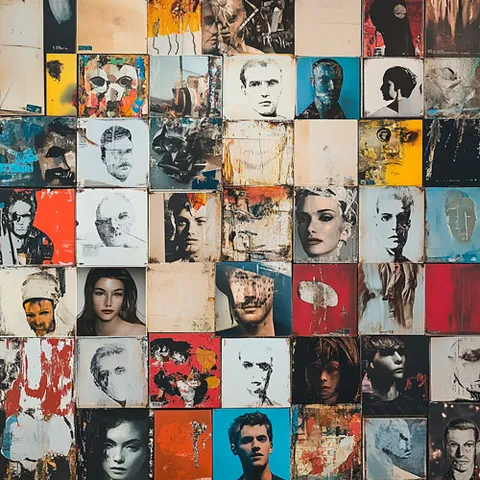
- Display the created faces as a collective gallery celebrating the group’s diversity.
- If virtual, save a screenshot or present the final result as a digital mosaic.
Materials
Sheets, poster boards, or canvases for drawing.
Creative materials: markers, colored pencils, stickers, etc.
Optional: digital design or drawing tools.
Practical recommendations
Provide visual examples of abstract faces to inspire creativity.
Introduce specific prompts such as “Represent what makes you unique” or “Design a face that symbolizes the group.”
Adapt materials to the artistic skills of the participants.
Reflect on how different styles and elements in the faces showcase unique perspectives.
Inspiration
Ideas for carrying out the Faces dynamic meaningfully:
- Introduce a theme like “Faces of the Future” to connect with an aspirational context.
- Offer basic templates to facilitate face creation for less experienced participants.
- Relate the activity to values such as diversity, inclusion, and collectivity.
- Reflect on how individual faces connect to a group vision.
- Encourage the use of visual metaphors to symbolize emotions or abstract ideas.
- Create a physical or digital gallery to preserve and reflect on the learning process.
- Use the faces as a basis for a follow-up activity, such as storytelling.
- Introduce team roles like designer, narrator, or critic to energize interaction.
- Relate the created faces to real-world situations, such as group projects.
- Explore how face design reflects cultural or personal values.