Collective Building
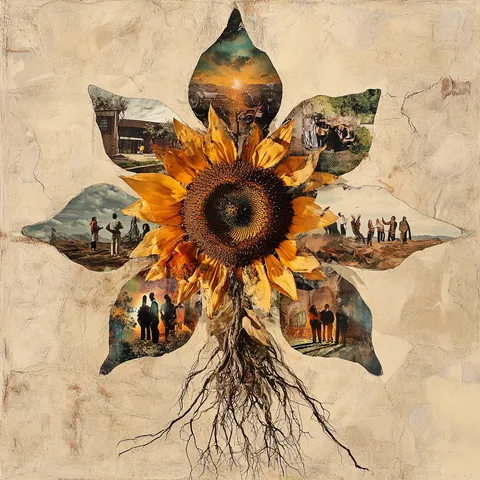
Appreciative inquiry
Appreciative inquiry is an organizational and community change methodology that begins from what is already working well to build the desired future, rather than analyzing problems and deficits.
Delphi method
The Delphi method is a structured consultation technique that collects and synthesizes the judgment of a group of people through successive rounds of questionnaires and anonymous feedback, progressively converging toward an informed consensus.
Design Sprint
Five-day method for going from a complex problem to a tested prototype — compressing months of design iteration into one focused week with real user feedback on day five.
Design Thinking Workshop
Innovation methodology in 5 phases: Empathize, Define, Ideate, Prototype, Test. Learn to facilitate Design Thinking workshops centered on people's real needs.
Force field analysis
Force field analysis is a participatory analysis tool developed by Kurt Lewin that helps a group identify the forces driving a desired change and those restraining it, in order to design strategies that strengthen the former and weaken the latter.
Future Search Conference
Conference method that brings all system stakeholders together for 2–3 days to build shared understanding and co-create an actionable common future.
Golden circle
The golden circle is a strategic reflection tool based on Simon Sinek's model that guides people, teams, or organizations to clarify their purpose (Why), their methods (How), and their actions (What), always starting from the center.
Liberating Structures
33 interaction microstructures that replace conventional meetings, distributing participation equally so every voice contributes — not just the loudest.
Lifeline
The lifeline is a biographical narrative activity in which participants trace their personal or group history along a timeline, marking key moments, turning points, and the learning that brought them to the present.
Open space
Open space (Open Space Technology) is a group self-organization methodology in which participants themselves create the agenda, choose the sessions, and define the topics of work, radically liberating collective intelligence without a pre-established program.
Participatory Budgeting
Democratic process where community members vote directly on how to spend part of the public budget — turning citizens into active co-designers of public investment.
Participatory Scenario Planning
Method for thinking under uncertainty: diverse stakeholders build four plausible futures, then identify strategies robust enough to hold regardless of which scenario unfolds.
Restorative circle
The restorative circle is a structured community practice developed by Dominic Barter that brings together those who caused harm, those who were affected, and the community around them to build mutual understanding and co-create agreements for repair and forward movement.
SCAMPER
SCAMPER is a creative thinking technique that guides the generation of new ideas through seven questions that invite you to Substitute, Combine, Adapt, Modify, Put to other uses, Eliminate, and Rearrange any existing idea, product, or solution.
Talking stick
The talking stick is a dialogue facilitation practice rooted in Indigenous traditions of North America that grants the right to speak only to the person holding the object, ensuring that every voice in the circle is heard with respect and without interruption.

Technology of Participation (ToP)
ICA facilitation system with three core methods — ORID Focused Conversation, Consensus Workshop, and Action Planning — to move groups from reflection to committed action.