Exchange of Perspectives
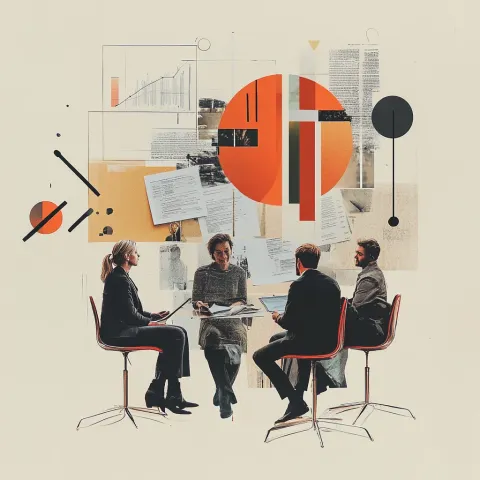
After Action Review (AAR)
Structured debrief with four questions for learning immediately after any project: what was planned, what happened, why the gap, and what to do differently next time.
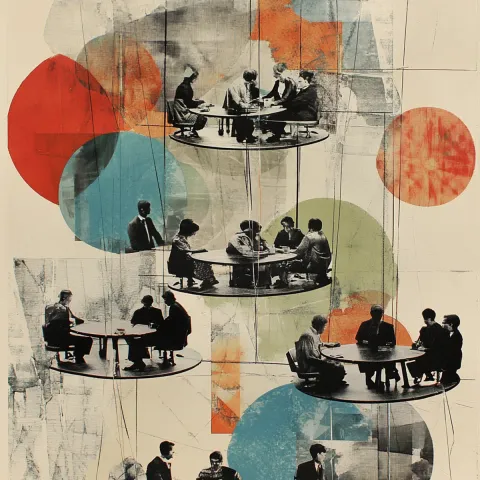
Art of Hosting
A facilitation framework for hosting meaningful conversations at scale. Integrates World Café, Open Space, and Circle practice to harvest collective wisdom from groups of 20 to 150.
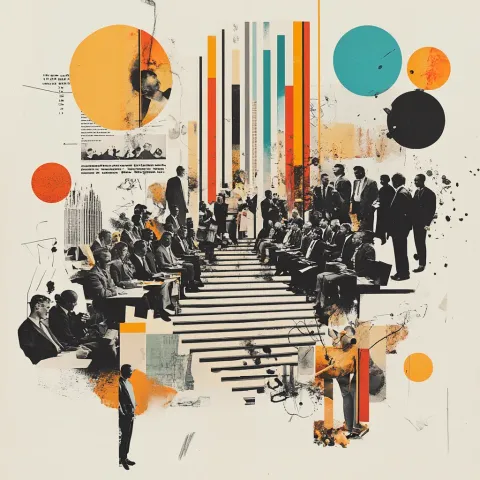
Citizens Assembly
Randomly selected citizens who deliberate on a complex policy question over weeks or months, producing evidence-based recommendations free from organized interests.
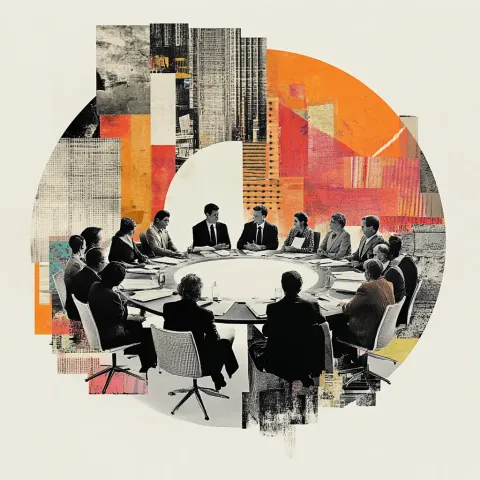
Civic Dialogues
Structured conversations between citizens and institutions on specific policy issues, with explicit mechanisms for public input to influence concrete decisions.

Customer Journey Mapping
Visualize a person's complete experience with your service step by step, uncovering emotions, pain points, and improvement opportunities at every touchpoint.

Deliberative Poll
Combines a scientific survey with facilitated deliberation to measure how public opinion shifts when citizens engage with balanced information and genuine peer dialogue.

Design Sprint
Five-day method for going from a complex problem to a tested prototype — compressing months of design iteration into one focused week with real user feedback on day five.

Design Thinking Workshop
Innovation methodology in 5 phases: Empathize, Define, Ideate, Prototype, Test. Learn to facilitate Design Thinking workshops centered on people's real needs.

Fishbowl discussion
Fishbowl is a participatory dynamic where a small group dialogues in the center while others observe, promoting active listening, multiple perspectives and deep reflection on complex topics.

Focus Group
Qualitative research method: moderated small-group discussion to explore participants' perceptions, attitudes, and lived experiences on a specific topic in depth.

Future Search Conference
Conference method that brings all system stakeholders together for 2–3 days to build shared understanding and co-create an actionable common future.

Lean Coffee
Self-organized meeting format where participants propose and vote on topics at the start, then use time-boxing to keep the most valued conversations first.

Liberating Structures
33 interaction microstructures that replace conventional meetings, distributing participation equally so every voice contributes — not just the loudest.

Nominal Group Technique (NGT)
Participatory technique combining silent idea generation and anonymous voting to produce ranked priority lists free from hierarchical influence and social pressure.
Oxford Debate
Two teams argue opposing sides of a motion while the audience votes before and after. Measures each side's persuasion power and builds critical thinking and argumentation skills in any group.

Participatory Budgeting
Democratic process where community members vote directly on how to spend part of the public budget — turning citizens into active co-designers of public investment.

Participatory Scenario Planning
Method for thinking under uncertainty: diverse stakeholders build four plausible futures, then identify strategies robust enough to hold regardless of which scenario unfolds.
Pre-mortem
A risk analysis technique where the group imagines the project has already failed and works backwards. Surfaces blind spots, hidden risks, and unspoken concerns while there's still time to act.
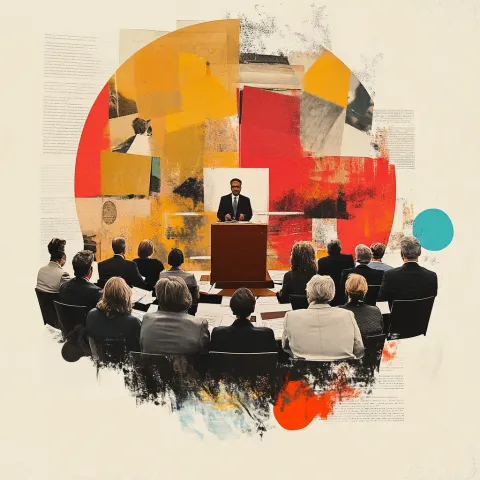
Public Consultation
Formal process for collecting public input on proposed decisions before they are finalized, with explicit links between what was heard and how it shaped the outcome.

Six Thinking Hats
Edward de Bono's parallel thinking method: 6 structured perspectives — facts, emotions, caution, optimism, creativity, and process — for more complete group decisions with less conflict and cognitive bias.

Sprint Retrospective
Agile team practice: structured session at the end of a sprint to examine what worked, what didn't, and commit to concrete improvements for next time.

Technology of Participation (ToP)
ICA facilitation system with three core methods — ORID Focused Conversation, Consensus Workshop, and Action Planning — to move groups from reflection to committed action.

Think – Pair – Share: Individual Reflection, Pair Dialogue, Group Sharing
A 3-step dynamic that activates everyone's participation: think alone, talk in pairs, share with the group. Guarantees equitable engagement in education, training, and facilitation at any scale.
Voice of Customer (VoC)
Research method for capturing what customers actually need and experience — in their own words — and translating that insight into concrete product and service improvements.

World Café
A structured conversational process where small groups rotate between tables and layer ideas collectively. Surfaces shared intelligence and consensus in groups of 20 to 100+ people.