Dynamics for project and program evaluation and closure

From the project that ends to the team that learns
Project closure is the moment where most organizational value is lost. The team knows what worked and what didn't, which opportunities were missed and why. But that knowledge, if not captured in a structured way, disappears with the project: the next initiative repeats the same mistakes, reinvents the same wheels, and the organization fails to learn.
This collection is designed for project managers, NGO program coordinators, and facilitators at the end of a training cohort. It covers the full process: from the opening that creates the conditions for an honest retrospective, to the formal closure that turns learnings into organizational assets.
What type of closure is this collection for?
- Short and long-term project closures
- Final evaluations for NGO programs or international cooperation
- Closure of training, certification, or acceleration cohorts
- Participatory evaluations with teams and beneficiaries
- Institutional review at the end of a stage or cycle
Reflective opening
Before evaluating anything, the team needs to mentally transition from doing to reflecting. The opening is not an icebreaker — it is the process of creating the psychological safety that will make an honest retrospective possible. Without it, the team enters the closure in defense mode or management-report mode.
Talking stick
The talking stick is a dialogue facilitation practice rooted in Indigenous traditions of North America that grants the right to speak only to the person holding the object, ensuring that every voice in the circle is heard with respect and without interruption.
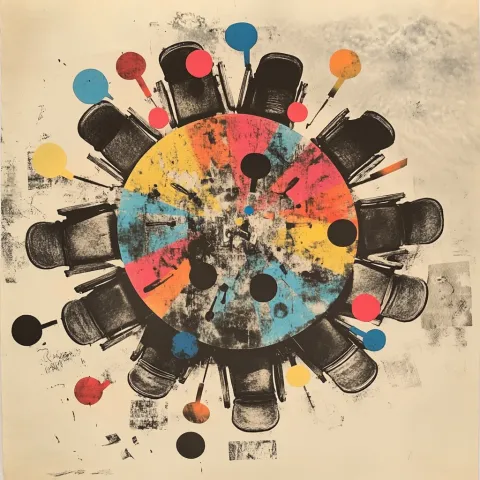
Talking Circles
Ancestral practice where all participants have equal voice, turns are regulated by a talking object, and deep listening is cultivated. Widely used in communities, NGOs, and the third sector.

Reflection with Images
Reflection with Images is a creative activity that uses visual elements to express emotions, ideas, and learnings.
Chronological project review
Before evaluating, you need to reconstruct. Memory is selective and revisionist: each person remembers the project from their role and their experience. A chronological review puts everyone on the same timeline, surfaces forgotten events, and creates the shared foundation the retrospective needs.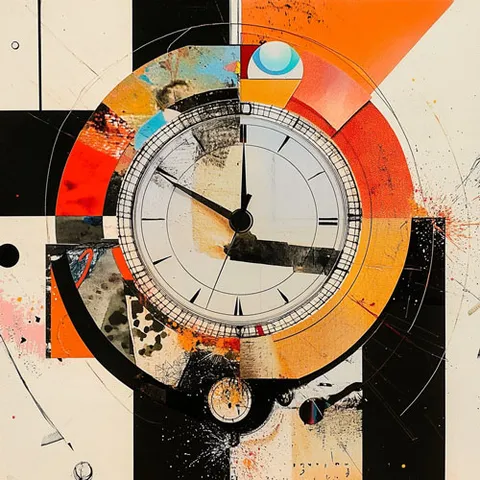
Chronological Review
The Chronological Review is a participatory activity that analyzes progress by comparing it to the planned timeline, promoting adjustments and reflections to ensure the project's success.
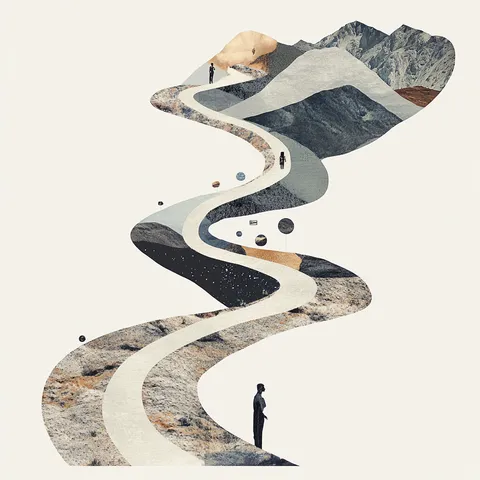
Lifeline
The lifeline is a biographical narrative activity in which participants trace their personal or group history along a timeline, marking key moments, turning points, and the learning that brought them to the present.

Narrative workshop
Engage in a Narrative workshop to share stories, foster empathy, and build collective solutions. Ideal for team building, reflection, and creative problem-solving.
Process retrospective
This is the qualitative and emotional evaluation: what worked, what didn't, how the team felt throughout the project. A well-facilitated retrospective is not an exercise in blame or justification — it is a space where difficult learnings can be said honestly because there is structure that contains them.
Four Ls Retrospective
Closing technique prompting reflection on what participants Liked, Learned, Lacked, and Longed for — generating collective learning and improvements for future program editions.
After Action Review (AAR)
Structured debrief with four questions for learning immediately after any project: what was planned, what happened, why the gap, and what to do differently next time.

Mad-Sad-Glad Retrospective
The Mad-Sad-Glad retrospective invites teams to surface what made them angry, sad, or glad, turning emotional reflection into concrete improvements for team culture and collaboration.

Sprint Retrospective
Agile team practice: structured session at the end of a sprint to examine what worked, what didn't, and commit to concrete improvements for next time.

I Like, I Wish, I Wonder
I Like, I Wish, I Wonder is a participatory activity where people reflect on a shared experience by expressing what they appreciated, what they would improve, and what questions they are left with, creating a space for honest feedback, learning, and connection.

Epic Failure
Epic Failure is a participatory activity that invites people to reframe and share failures as valuable learning experiences, turning setbacks into collective strength and resilience.
Results and impact evaluation
After reviewing the process (how we worked), comes reviewing the results (what we achieved). This phase compares original objectives against what actually happened. It includes both the quantitative perspective and the narratives of change that no indicator can capture.
Evaluation wheel
The Evaluation wheel is a visual and participatory tool that allows for the evaluation and reflection on different aspects of a project or activity, facilitating collective analysis and improvement planning.

Gallery of results
The Gallery of results is a visual and participatory exhibition that allows achievements and lessons to be shared in a creative and reflective way.

Stories of change
Stories of change are a participatory tool for capturing and analyzing real experiences that showcase significant transformations and deep learning.
Beneficiary Stories
The Beneficiary Stories dynamic collects and reflects on personal narratives to document the impact of projects and generate learning from the perspective of those who lived through them.
Benefit Map
The Benefit Map is a visual tool that connects projects with the positive impacts they generate, helping to prioritize actions and maximize results in participatory contexts.

Participatory SWOT Analysis
Participatory SWOT Analysis is a collaborative tool used to identify and connect strengths, opportunities, weaknesses, and threats to design collective strategies.
Systematizing learnings
The difference between a closure and a closure that produces organizational value lies in this phase. Systematizing is not making a list of what each person learned — it is converting individual experiences into transferable knowledge the organization can use in the next project. It requires structure, facilitation, and deliberate time.
Technology of Participation (ToP)
ICA facilitation system with three core methods — ORID Focused Conversation, Consensus Workshop, and Action Planning — to move groups from reflection to committed action.

Affinity diagram
The Affinity Diagram is a visual and participatory tool that organizes ideas into categories to facilitate group analysis and informed decision-making.

World Café
A structured conversational process where small groups rotate between tables and layer ideas collectively. Surfaces shared intelligence and consensus in groups of 20 to 100+ people.
360-Degree Feedback
360-Degree Feedback allows participants to reflect on strengths and areas for improvement through feedback gathered from multiple perspectives.
Transfer and continuity
What happens with what they built? Who carries the work forward? Without an explicit transfer, learnings get trapped in the memory of the people who participated. This phase creates bridges toward what comes next: the next project, the team that continues, or the organization that needs that knowledge.
Force field analysis
Force field analysis is a participatory analysis tool developed by Kurt Lewin that helps a group identify the forces driving a desired change and those restraining it, in order to design strategies that strengthen the former and weaken the latter.

Communities of Practice
Communities of Practice brings together people with shared interests or challenges to exchange experiences, build collective knowledge, and generate solutions collaboratively.

Fishbowl discussion
Fishbowl is a participatory dynamic where a small group dialogues in the center while others observe, promoting active listening, multiple perspectives and deep reflection on complex topics.

Prototype gallery
The Prototype gallery is a participatory activity that allows teams to present initial models of their ideas, receive feedback, and collaboratively refine their proposals.
Celebration and recognition
Celebrating is not an extra added at the end if time permits — it is a necessary phase of the cycle. Teams that don't close their projects well arrive at the next one carrying unresolved energy. Genuine peer recognition and celebrating what was achieved — even when the project wasn't successful in all its objectives — allow the team to truly close.
Appreciative inquiry
Appreciative inquiry is an organizational and community change methodology that begins from what is already working well to build the desired future, rather than analyzing problems and deficits.
Circle of gratitude
The Circle of gratitude promotes gratitude and mutual recognition among participants, strengthening group bonds and fostering a positive environment.
Restorative circle
The restorative circle is a structured community practice developed by Dominic Barter that brings together those who caused harm, those who were affected, and the community around them to build mutual understanding and co-create agreements for repair and forward movement.
Formal closure
The final moment of the process: turning learning into legacy. Closure dynamics create a symbolic and concrete marker that signals something is ending and something remains. Without this moment, the project doesn't close — it is abandoned.
The Letter
The Letter is a reflective activity that allows participants to write meaningful messages to explore emotions, thoughts, and personal connections.
Time Capsule
Time Capsule is a reflective activity that allows participants to capture their current ideas, wishes, and learnings in a symbolic capsule to be opened in the future, fostering introspection and group cohesion.

Confidence Vote
Confidence Vote is a fast participatory dynamic that lets groups gauge consensus, commitment levels, or uncertainty on a proposal by voting with hand signals or visual cues.
Keys to a project closure that produces real learning
1. The opening is not optional
A team that arrives at the closure without an adequate opening arrives in defense mode: each person protecting their piece of the work. The reflective opening is not social — it is the investment that determines whether the retrospective produces honest learnings or a polished version of what happened. Thirty minutes of well-facilitated opening are worth more than two hours of retrospective without containment.
2. There is a difference between venting and systematizing
The retrospective is the space for saying what didn't work. Systematization is the process of turning that into knowledge the organization can use. If only the retrospective is done without systematization, the team releases emotions but the organization doesn't learn. The facilitator needs to design both moments separately and with different intentions.
3. Evaluating results is not the same as evaluating the process
Many project closures confuse the two. The process is how we worked: team dynamics, communication, decisions, moments of crisis. Results are what we achieved: deliverables, impact on beneficiaries, goal fulfillment. Both evaluations are necessary and distinct. Mixing them produces confusing feedback and incomplete learnings.
4. Knowledge that is not transferred is lost
The most common problem in project closures is not that the team didn't learn — it is that knowledge gets trapped in the people who participated. When those people move to the next project, or leave the organization, the learning goes with them. The transfer and continuity phases are not a luxury: they are the difference between an organization that learns and one that repeats.