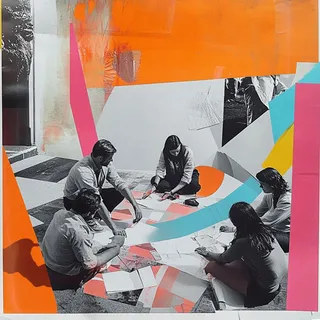

Preparation
01 · Define the context
02 · Set time horizons
03 · Prepare materials
- Large paper, whiteboards, or digital tools.
- Colored markers, sticky notes, scenario templates.
Step-by-step instructions
1
Introduction to the purpose
- Explain the importance of imagining future scenarios for planning and design.
- Introduce the topic or project and define the time horizon.
- Share examples of future scenarios to inspire participants.
2
Define initial conditions
- Work with participants to identify key factors that could influence the future of the topic (e.g., technology, policies, social changes).
- Group the factors into categories, such as opportunities, threats, or uncertainties.
3
Create scenarios
- Divide the group into teams and assign each one the task of developing a specific scenario based on combinations of key factors.
- Examples of scenarios:
- Optimistic: Positive factors are maximized.
- Pessimistic: Threats dominate.
- Innovative: Disruptive solutions emerge.
- Conservative: Minimal changes occur.
- Ask teams to describe what the future would look like in their scenario using narratives, drawings, or diagrams.
4
Present scenarios
- Each team presents its scenario to the rest of the group, highlighting key elements, opportunities, and risks.
- Encourage questions and feedback between teams.
5
Comparative analysis
- Review the scenarios together and analyze similarities, differences, and emerging patterns:
- What elements are common across all scenarios?
- What risks or challenges stand out?
- What innovative ideas can be integrated into the present?
6
Reflection and synthesis
- Facilitate a discussion on how the future scenarios can inform current decisions.
- Summarize key learnings and prioritize the most relevant ideas for the group or project.
Materials
Large paper, whiteboards, or digital tools to document the scenarios.
Colored markers, sticky notes, and scenario templates.
Projector.
Digital tools
Platforms
For virtual sessions or collaborative documentation.
Practical recommendations
Diversity in teams
Ensure participants with different perspectives and experiences are included.
Clarity in rules
Clearly define the factors and conditions to avoid confusion.
Creative flexibility
Allow teams to use various media to express their scenarios (drawings, stories, diagrams).
Documentation
Record the created scenarios for analysis and future reference.
Inspiration
- Project Earth2050