Participatory Planning

Activity clock
The Activity clock invites participants to organize and balance their daily time through an effective visual representation.

Affinity diagram
The Affinity Diagram is a visual and participatory tool that organizes ideas into categories to facilitate group analysis and informed decision-making.
After Action Review (AAR)
Structured debrief with four questions for learning immediately after any project: what was planned, what happened, why the gap, and what to do differently next time.
Anticipating Challenges
Anticipating Challenges is a participatory activity in which teams imagine that their project has failed and analyze the possible reasons behind this scenario.
Appreciative inquiry
Appreciative inquiry is an organizational and community change methodology that begins from what is already working well to build the desired future, rather than analyzing problems and deficits.
Art of Hosting
A facilitation framework for hosting meaningful conversations at scale. Integrates World Café, Open Space, and Circle practice to harvest collective wisdom from groups of 20 to 150.
Art Trail
Art Trail is a collaborative activity in which participants intervene in a public or community space through collective artistic actions, aiming to reframe and transform it into a unique, meaningful, and shared place for the community.

Backward Planning
La Planificación retroactiva ayuda a identificar los pasos necesarios para lograr un objetivo trabajando desde el resultado final hacia el presente, promoviendo la estrategia y la claridad grupal.
Benefit Map
The Benefit Map is a visual tool that connects projects with the positive impacts they generate, helping to prioritize actions and maximize results in participatory contexts.

Bottleneck Analysis
The Bottleneck Analysis is a participatory tool for identifying and addressing recurring obstacles in a project, optimizing processes, and promoting effective collaboration.

Brainstorming
Brainstorming fosters collective creativity and collaboration by generating multiple proposals to address a specific challenge.
Challenge-Based Learning
Challenge-Based Learning connects learning with action by engaging participants in concrete problems that they must collaboratively solve.

Chronological Review
The Chronological Review is a participatory activity that analyzes progress by comparing it to the planned timeline, promoting adjustments and reflections to ensure the project's success.
Circular Conversations
Circular Conversations is a group activity that combines movement and interaction to foster meaningful connections among participants.
Citizens Assembly
Randomly selected citizens who deliberate on a complex policy question over weeks or months, producing evidence-based recommendations free from organized interests.
Civic Dialogues
Structured conversations between citizens and institutions on specific policy issues, with explicit mechanisms for public input to influence concrete decisions.

Collaborative Benchmarking
Collaborative Benchmarking promotes continuous improvement through comparative analysis and the adaptation of successful practices to one's own context.

Collaborative Competition
Collaborative Competition is an activity that combines teamwork with problem-solving in a friendly, competitive format to foster creativity and learning.
Collaborative mind map
The Collaborative mind map is a visual tool that allows groups to explore, organize, and connect ideas on a topic in a creative and participatory way.
Collective Questionnaire
The Collective Questionnaire is a participatory dynamic that enables the collaborative design of key questions, ensuring their relevance and usefulness for the project's or research’s purpose.

Collective Rube Goldberg Machine
Collective Rube Goldberg Machine is a participatory activity where teams collaboratively build a whimsical chain reaction device to perform a simple task, using creativity, problem-solving, and everyday materials to spark teamwork and fun experimentation.

Community Auction
The Community Auction is an activity where projects symbolically compete for resources, fostering collective evaluation and critical analysis of priorities.

Community Garden
Community garden is a participatory activity in which neighbors, students, or community groups come together to create and care for a garden in a shared space. Through collaborative work, they grow food, exchange knowledge, and strengthen their connection with the environment and the community.

Community Planting Day
Community Planting Day is a participatory dynamic where a group comes together to plant vegetation in a shared space, promoting environmental awareness, social connection, and collective responsibility.

Concept Route
The Concept Route organizes and connects key ideas through a collaborative visual journey, facilitating learning and the communication of complex topics.
Confidence Vote
Confidence Vote is a fast participatory dynamic that lets groups gauge consensus, commitment levels, or uncertainty on a proposal by voting with hand signals or visual cues.
Creation of instructional resources
The Creation of instructional resources is a participatory activity that allows participants to design educational tools while consolidating their learning and developing creative skills.
Creative Stations
Creative Stations combine rotating and participatory activities to explore a topic from multiple perspectives, fostering creativity and active learning.

Customer Journey Mapping
Visualize a person's complete experience with your service step by step, uncovering emotions, pain points, and improvement opportunities at every touchpoint.
Daily Standup Meeting
Daily Standup Meeting is a short recurring group session where participants share progress, current focus, and blockers to keep the team aligned and moving forward together.
Decision maze
The Decision maze guides participants through paths and challenges that simulate real decision-making processes, promoting critical and collaborative learning.

Deliberative Poll
Combines a scientific survey with facilitated deliberation to measure how public opinion shifts when citizens engage with balanced information and genuine peer dialogue.
Delphi method
The Delphi method is a structured consultation technique that collects and synthesizes the judgment of a group of people through successive rounds of questionnaires and anonymous feedback, progressively converging toward an informed consensus.
Design Sprint
Five-day method for going from a complex problem to a tested prototype — compressing months of design iteration into one focused week with real user feedback on day five.
Design Thinking Workshop
Innovation methodology in 5 phases: Empathize, Define, Ideate, Prototype, Test. Learn to facilitate Design Thinking workshops centered on people's real needs.

Diagnostic Walk
The Diagnostic Walk is a participatory activity that uses direct observation of the environment to build a collective diagnosis and propose solutions grounded in local context.
Dot Voting
Dot Voting is a participatory technique that combines analysis and prioritization to identify the most relevant proposals within a collective process, promoting collaboration and group consensus.

Evaluation wheel
The Evaluation wheel is a visual and participatory tool that allows for the evaluation and reflection on different aspects of a project or activity, facilitating collective analysis and improvement planning.

Expert Panel
Format combining structured presentations from specialists with active audience participation, creating dialogue between expert knowledge and citizen or professional perspectives.

Feature prioritization
Feature prioritization is a participatory exercise designed to identify and organize the key elements of a project or design, ensuring a focus on the most relevant and viable aspects.
Flowchart
Flowchart is a collaborative technique that allows participants to analyze cause-effect relationships within a central topic, identify “critical knots,” and assign responsibilities for strategic planning.

Focus Group
Qualitative research method: moderated small-group discussion to explore participants' perceptions, attitudes, and lived experiences on a specific topic in depth.
Force field analysis
Force field analysis is a participatory analysis tool developed by Kurt Lewin that helps a group identify the forces driving a desired change and those restraining it, in order to design strategies that strengthen the former and weaken the latter.
Forum Theater
Engage in Forum Theater, a participatory method to explore social issues through performance. Empower communities, foster creative solutions, and promote collective action.

Future scenarios
The Future Scenarios activity allows participants to imagine different development possibilities to anticipate risks, seize opportunities, and generate innovative ideas.

Future Search Conference
Conference method that brings all system stakeholders together for 2–3 days to build shared understanding and co-create an actionable common future.

Golden circle
The golden circle is a strategic reflection tool based on Simon Sinek's model that guides people, teams, or organizations to clarify their purpose (Why), their methods (How), and their actions (What), always starting from the center.

Heat Map Voting
Heat Map Voting is a visual and collaborative technique for prioritizing key aspects within a set of ideas by distributing multiple votes across specific elements.

How Might We (HMW)
How Might We is a Design Sprint methodology that transforms pain points into positive, collaborative questions, guiding the team toward creative solutions.

Ideas marketplace
The Ideas marketplace is a participatory activity that simulates a market where participants collectively decide how to allocate a budget among various ideas or projects.
Impact and feasibility scale
The Impact and feasibility scale is a participatory tool for evaluating proposals based on their potential benefit and ease of implementation, promoting strategic and consensus-driven decisions.

Impact vs. Effort Matrix
The Impact vs. Effort Matrix helps prioritize actions and decisions by evaluating them based on their impact and required effort, promoting efficiency and effectiveness.
Inquiry Workshop
Discover how the Inquiry Workshop fosters critical thinking and collective exploration by generating key questions that guide research, project design, and problem analysis.
Interaction map
The Interaction map is a visual activity that enables participants to identify and analyze key relationships within a system to make informed decisions.
Intergenerational Dialogue
Promote understanding and collaboration across generations with Intergenerational Dialogue, a dynamic activity that fosters empathy, mutual learning, and shared solutions by exploring diverse experiences, values, and perspectives.
Investment Roulette
Investment Roulette is an activity that assigns proposals to random categories, fostering creativity, strategic analysis, and collective decision-making.
Investor role-playing
Investor role-playing is a strategic and engaging activity that simulates resource allocation to collectively evaluate and prioritize proposals.

Lean Coffee
Self-organized meeting format where participants propose and vote on topics at the start, then use time-boxing to keep the most valued conversations first.
Learning puzzle
The Learning puzzle is an activity where participants learn and teach parts of a topic to collectively build a comprehensive understanding.

Local Connections Map
The Local Connections Map is a participatory tool for identifying and analyzing existing networks within an environment, promoting collaboration and strengthening key relationships.

Make a Wish
Make a Wish is a participatory dynamic in which a community identifies meaningful wishes or needs that can be addressed collectively, votes on one of them, and organizes collaborative actions to make it come true, gathering support from individuals, organizations, and local businesses.
Narrative workshop
Engage in a Narrative workshop to share stories, foster empathy, and build collective solutions. Ideal for team building, reflection, and creative problem-solving.

Nominal Group Technique (NGT)
Participatory technique combining silent idea generation and anonymous voting to produce ranked priority lists free from hierarchical influence and social pressure.
Now, Next, Later
Now, Next, Later organizes tasks based on their temporal priority to promote clarity, focus, and efficiency in planning.

OKR Workshop
A facilitated session where teams co-create their Objectives and Key Results — ambitious, measurable goals that align each person's work with organizational strategy.

Open space
Open space (Open Space Technology) is a group self-organization methodology in which participants themselves create the agenda, choose the sessions, and define the topics of work, radically liberating collective intelligence without a pre-established program.
Ordering the sequence
Ordering the Sequence helps organize milestones or events within a process, promoting collaborative analysis and visual understanding.
Paper Airplanes
Paper Airplane Creation is a collaborative activity that simulates strategic decision-making through building and launching paper airplanes, illustrating how choices impact collective outcomes.
Participatory Action Research (PAR)
A cyclical methodology where communities investigate their own problems, generate knowledge collectively, and take transformative action. Research done by communities, not on them.

Participatory Budgeting
Democratic process where community members vote directly on how to spend part of the public budget — turning citizens into active co-designers of public investment.
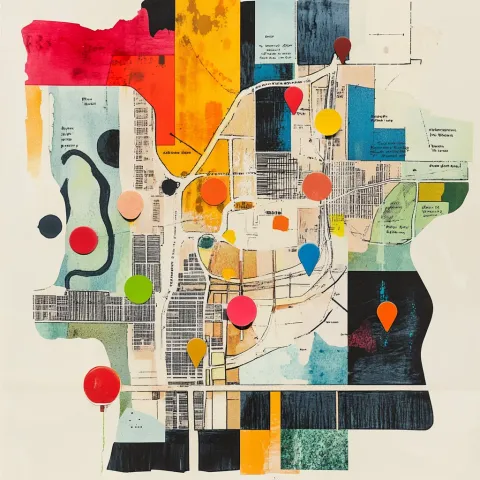
Participatory Mapping
Community members collectively map their territory, resources, and needs. Essential for community diagnosis, local public policy, and territorial rights advocacy.
Participatory Scenario Planning
Method for thinking under uncertainty: diverse stakeholders build four plausible futures, then identify strategies robust enough to hold regardless of which scenario unfolds.
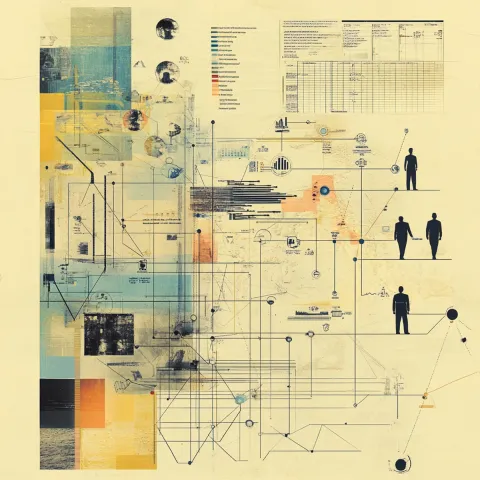
Participatory Service Blueprint
A co-design tool that maps a service's full anatomy — visible interactions and backstage processes — built together by the people who use and deliver it.

Participatory SWOT Analysis
Participatory SWOT Analysis is a collaborative tool used to identify and connect strengths, opportunities, weaknesses, and threats to design collective strategies.
Perception Scale
Engage participants with Perception Scales, a dynamic tool to capture and analyze diverse views, fostering reflection and group insights for actionable outcomes.
Pre-mortem
A risk analysis technique where the group imagines the project has already failed and works backwards. Surfaces blind spots, hidden risks, and unspoken concerns while there's still time to act.
Problem Chain
The Problem Chain is a visual and collaborative tool to identify, analyze, and connect the causes and effects of a problem, building strategic solutions.
Project bank
The Project Bank is a participatory activity for presenting, evaluating, and prioritizing proposals, fostering collaborative resource allocation and the strategic development of ideas.
Public Consultation
Formal process for collecting public input on proposed decisions before they are finalized, with explicit links between what was heard and how it shaped the outcome.
Risk mapping
Risk mapping is a visual and participatory tool for identifying and analyzing threats and vulnerabilities in a specific area or context, fostering collective strategies for prevention and response.
Root Cause Analysis
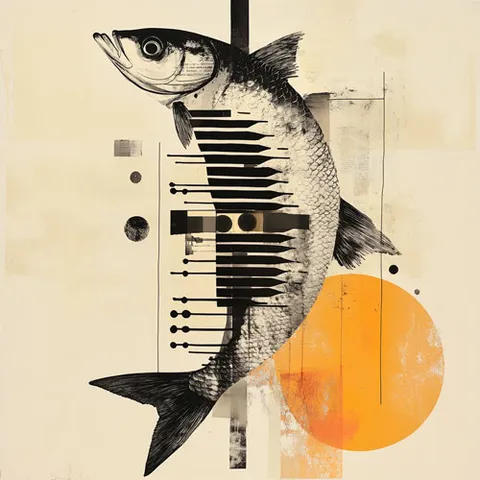
Root Cause Analysis uses the fishbone diagram to identify the main causes of a problem and promote effective solutions.

Situationist Drift
The Situationist Drift invites participants to explore urban spaces freely and subjectively, fostering creativity and critical reflection on the environment.

Six Thinking Hats
Edward de Bono's parallel thinking method: 6 structured perspectives — facts, emotions, caution, optimism, creativity, and process — for more complete group decisions with less conflict and cognitive bias.
Skills Mosaic
Skills Mosaic is a participatory activity that helps teams identify and visualize their collective strengths, fostering collaboration, trust, and mutual recognition.

SMART Goal-Setting Workshop
El Taller de redacción de objetivos SMART enseña a los participantes a formular metas claras y efectivas mediante la reflexión y colaboración.
Sociocracy: Consent-Based Decision Making
Governance system using consent — not consensus — to make decisions, organizing work in circles with clear roles and distributing power equitably across the organization.

Solution tree
Solution tree is a collaborative activity to analyze problems, identify root causes, and develop actionable solutions. Ideal for fostering teamwork, critical thinking, and creative problem-solving.

Sprint Retrospective
Agile team practice: structured session at the end of a sprint to examine what worked, what didn't, and commit to concrete improvements for next time.
Team Charter Workshop
A foundational session where a new team co-creates their shared purpose, roles, working agreements, and norms — the social contract that makes real collaboration possible.

Technology of Participation (ToP)
ICA facilitation system with three core methods — ORID Focused Conversation, Consensus Workshop, and Action Planning — to move groups from reflection to committed action.
The Ideal Leader
The Ideal Leader allows for the collective construction of an effective leadership profile, fostering reflection and group alignment.

The Ladder of Abstraction
The Ladder of Abstraction is an activity that guides participants in reframing problems through both expansive and specific approaches, fostering strategic and innovative solutions.
The Nine Questions Technique
The Nine Questions Technique is a participatory methodology that provides a comprehensive structure for designing, planning, or evaluating projects. It promotes collective reflection and collaborative work by addressing all essential aspects of a project in an integrated way.
Thematic Committees
Thematic Committees are working groups that analyze specific proposals in key areas, promoting informed and strategic decisions through active participation and collaboration.

Theory of Change
A participatory framework that maps how a group's activities generate real change. Connects actions, outputs, outcomes, and impact — and makes visible the assumptions that must hold at every link.

Traffic Light Activity
The Traffic Light Activity is a visual and collaborative tool for identifying strengths, areas for improvement, and critical issues, promoting informed and strategic decision-making.

Treasure Hunt
The Treasure Hunt combines teamwork and challenge-solving to promote active learning and collaboration in an engaging, game-based format.

Urban Treasure Hunt
Urban Treasure Hunt is a participatory activity where groups explore a territory following clues and solving challenges to discover local places, resources, and stories, fostering territorial knowledge and teamwork.

Visioning Workshop
Strategic planning methodology for co-creating a concrete image of a desired future, establishing the foundation for collective transformation and change processes.
Wheel of common interests
The Common Interests Wheel connects participants through hobbies and affinities, promoting interaction and establishing foundations for future group collaborations.

World Café
A structured conversational process where small groups rotate between tables and layer ideas collectively. Surfaces shared intelligence and consensus in groups of 20 to 100+ people.