Participatory organizational diagnosis: dynamics to understand the situation with real input

Diagnosing with people, not about people
A participatory diagnosis starts from a simple premise: the people who live a situation hold information that no external consultant can obtain through individual interviews or document analysis alone. When the diagnosis is well designed, that distributed knowledge becomes visible, is compared, is processed collectively, and produces findings the system can recognize as its own.
What situations is this collection for?
- New leadership that needs to understand the organization before making decisions
- Organizational development consultants at the start of an engagement
- HR or culture teams designing a climate or capability diagnostic
- Facilitators supporting change processes that require a participatory baseline
Stakeholder mapping and context
Before asking questions, map the terrain: who are the relevant actors, what are their roles and interests, how do they relate to each other, and what experience do they have with the problem. Without this step, the diagnosis captures only the perspectives of those with the most access or the loudest voice.
Insight Exchange
Insight Exchange allows for the collection of rich perspectives as participants exchange ideas and reflect on shared experiences.

Focus Group
Qualitative research method: moderated small-group discussion to explore participants' perceptions, attitudes, and lived experiences on a specific topic in depth.

Interaction map
The Interaction map is a visual activity that enables participants to identify and analyze key relationships within a system to make informed decisions.

Empathy Map
The Empathy Map helps to better understand people's emotions, thoughts, and behaviors to design more human-centered and effective solutions.

Diagnostic Walk
The Diagnostic Walk is a participatory activity that uses direct observation of the environment to build a collective diagnosis and propose solutions grounded in local context.

Evaluation wheel
The Evaluation wheel is a visual and participatory tool that allows for the evaluation and reflection on different aspects of a project or activity, facilitating collective analysis and improvement planning.
Appreciative exploration
Before looking for problems, understand what works and why. Diagnoses that start from problems generate defensiveness and conversations about blame. Those that start from strengths create the conditions for honest collective exploration of what isn't working.
Appreciative inquiry
Appreciative inquiry is an organizational and community change methodology that begins from what is already working well to build the desired future, rather than analyzing problems and deficits.

Chronological Review
The Chronological Review is a participatory activity that analyzes progress by comparing it to the planned timeline, promoting adjustments and reflections to ensure the project's success.

Stories of change
Stories of change are a participatory tool for capturing and analyzing real experiences that showcase significant transformations and deep learning.

Beneficiary Stories
The Beneficiary Stories dynamic collects and reflects on personal narratives to document the impact of projects and generate learning from the perspective of those who lived through them.

Reflection with Images
Reflection with Images is a creative activity that uses visual elements to express emotions, ideas, and learnings.

I Like, I Wish, I Wonder
I Like, I Wish, I Wonder is a participatory activity where people reflect on a shared experience by expressing what they appreciated, what they would improve, and what questions they are left with, creating a space for honest feedback, learning, and connection.
Problem and dynamics exploration
With the terrain mapped and strengths identified, explore problems in depth: not just what isn't working, but why, what forces sustain it, what lies below the surface. This phase produces the real diagnosis — not the symptom list, but the understanding of the system that generates them.
Participatory SWOT Analysis
Participatory SWOT Analysis is a collaborative tool used to identify and connect strengths, opportunities, weaknesses, and threats to design collective strategies.

Force field analysis
Force field analysis is a participatory analysis tool developed by Kurt Lewin that helps a group identify the forces driving a desired change and those restraining it, in order to design strategies that strengthen the former and weaken the latter.

The Iceberg Model
The Iceberg Model is a mindful methodology that analyzes both visible and hidden aspects of products and services to foster sustainable and strategic design.

Root Cause Analysis
Root Cause Analysis uses the fishbone diagram to identify the main causes of a problem and promote effective solutions.

Bottleneck Analysis
The Bottleneck Analysis is a participatory tool for identifying and addressing recurring obstacles in a project, optimizing processes, and promoting effective collaboration.

Critical Incident
The Critical Incident activity is based on experiential learning techniques and reflective analysis to turn challenges into opportunities for growth.
Broad perspective capture
For the diagnosis to be representative, you need to hear beyond those with institutional voice. This phase creates spaces where different groups — frontline teams, technical areas, external allies — can contribute their perspective under conditions of equity.
World Café
A structured conversational process where small groups rotate between tables and layer ideas collectively. Surfaces shared intelligence and consensus in groups of 20 to 100+ people.

Open space
Open space (Open Space Technology) is a group self-organization methodology in which participants themselves create the agenda, choose the sessions, and define the topics of work, radically liberating collective intelligence without a pre-established program.

Fishbowl discussion
Fishbowl is a participatory dynamic where a small group dialogues in the center while others observe, promoting active listening, multiple perspectives and deep reflection on complex topics.

Voice of Customer (VoC)
Research method for capturing what customers actually need and experience — in their own words — and translating that insight into concrete product and service improvements.
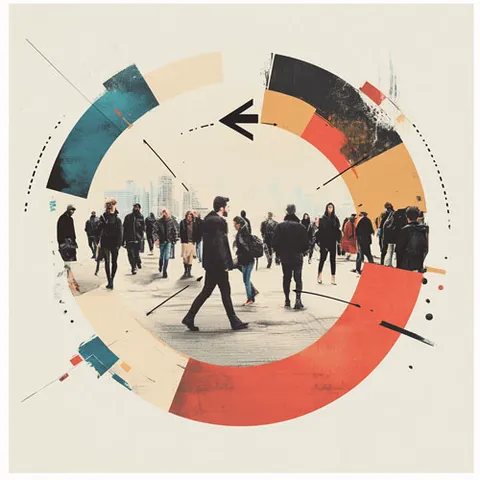
360-Degree Feedback
360-Degree Feedback allows participants to reflect on strengths and areas for improvement through feedback gathered from multiple perspectives.
Findings synthesis
After gathering perspectives from multiple sources, the facilitation team needs to find patterns, group similar items, and build a findings map the group can recognize as faithful to what they said. Without synthesis, the diagnosis is a file of notes, not an input for action.
Affinity diagram
The Affinity Diagram is a visual and participatory tool that organizes ideas into categories to facilitate group analysis and informed decision-making.

Technology of Participation (ToP)
ICA facilitation system with three core methods — ORID Focused Conversation, Consensus Workshop, and Action Planning — to move groups from reflection to committed action.

Nominal Group Technique (NGT)
Participatory technique combining silent idea generation and anonymous voting to produce ranked priority lists free from hierarchical influence and social pressure.
Collective prioritization
Not all findings deserve the same attention. Collective prioritization turns the diagnostic map into an actionable agenda, where the group determines what to address first and why — without hierarchy or whoever speaks loudest setting the agenda alone.
Dot Voting
Dot Voting is a participatory technique that combines analysis and prioritization to identify the most relevant proposals within a collective process, promoting collaboration and group consensus.

Heat Map Voting
Heat Map Voting is a visual and collaborative technique for prioritizing key aspects within a set of ideas by distributing multiple votes across specific elements.

Impact and feasibility scale
The Impact and feasibility scale is a participatory tool for evaluating proposals based on their potential benefit and ease of implementation, promoting strategic and consensus-driven decisions.

Impact vs. Effort Matrix
The Impact vs. Effort Matrix helps prioritize actions and decisions by evaluating them based on their impact and required effort, promoting efficiency and effectiveness.
Validation and feedback
The diagnosis doesn't end when the facilitation team produces the report — it ends when findings are returned to the group, validated, and connected to the decisions they will generate. Without this step, the diagnosis is a document that few will read and fewer will use.
Gallery of results
The Gallery of results is a visual and participatory exhibition that allows achievements and lessons to be shared in a creative and reflective way.

Data-driven decisions
Data-driven decisions is a collaborative activity designed to help teams classify key questions, explore research methods, and balance qualitative and quantitative insights to drive better decision-making.
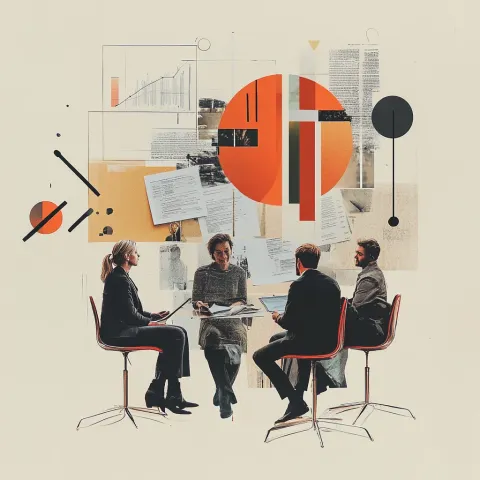
After Action Review (AAR)
Structured debrief with four questions for learning immediately after any project: what was planned, what happened, why the gap, and what to do differently next time.
Keys to a diagnosis that produces real understanding
1. Diagnosing means listening, not confirming
The greatest risk in a participatory diagnosis is that it is designed to confirm what the consultant or new leadership already believes. The guiding questions, participant selection, and analysis must be designed to surprise — to reveal what wasn't known, not to validate what was already assumed.
2. Separate symptoms from causes
What a diagnosis collects first are symptoms: complaints, visible problems, manifest conflicts. The causes lie deeper. Deep exploration dynamics — iceberg, root cause analysis, force field — exist specifically to avoid staying at the surface layer of what people report when asked what is wrong.
3. The diagnosis belongs to the system, not the consultant
A diagnosis that lives only in the consultant's mind or in a report nobody read has no effect. The collective validation and feedback process is not an optional step — it is what converts findings into organizational knowledge the system can use to change.
4. Close the loop: say what will be done with what was heard
The people who participated in the diagnosis deserve to know what happened with their input. Communicate the findings, explain which issues were prioritized and why, and connect the diagnosis to the concrete actions it will generate. Without this close, the diagnosis teaches that participation changes nothing.