Energizing Activities to Return to Work After Vacation
Strategies for facilitating reintegration with motivation and team connection
Returning to work after a vacation period can be a challenging moment for both individuals and entire teams. The transition from rest to productivity requires not only physical and mental adjustment, but also social reconnection and the reestablishment of collaborative routines. Energizing activities to return to work after vacation are participatory tools designed specifically to facilitate this transition, activating motivation, renewing group energy, and strengthening team bonds after time spent disconnected. Unlike simply "returning to routine," these activities create intentional experiences that acknowledge the change in emotional and physical state that people experience when returning from vacation. Through carefully selected activities that balance physical activation, social reconnection, and mental focus, teams can more easily overcome "post-vacation syndrome" and recover their productive rhythm with a positive attitude. This type of activity is also known as: post-vacation workplace reintegration activities, energizing games for returning to work, activation activities after rest, group reconnection exercises after vacation, or vacation-to-work transition activities.Why are energizing activities necessary after vacation?
Returning to work after vacation involves multiple challenges that go beyond simple readaptation to schedules. Teams returning from vacation periods face desynchronization in work rhythms, temporary loss of group cohesion due to staggered returns, and the need to reactivate communication and collaboration patterns that were paused. Energizing activities address these challenges comprehensively, offering specific benefits for this transition moment:- Gradual reactivation of the team's physical and mental energy.
- Social reconnection after the time of vacation separation.
- Reduction of stress associated with returning to work responsibilities.
- Generation of renewed enthusiasm and motivation for new projects.
- Facilitation of the psychological transition from "rest" mode to "work" mode.
- Creation of a welcoming environment that validates the prior time of rest.
- Reestablishment of collaboration routines in a playful and natural way.
- Mutual updates on vacation experiences that strengthen personal bonds.
Types of energizing activities for the post-vacation return
Reconnection and experience-sharing activities
These activities create structured spaces for team members to share recent or significant experiences, without being limited to rest or a specific type of experience. Creative formats go beyond "how was your vacation?" and allow meaningful mutual updates, strengthening bonds and creating connection points that enrich working relationships.
Photo Storytelling
Photo Storytelling is an activity where participants select random images and use them to construct a story, fostering creativity and group engagement.
Make a Wish
Make a Wish is a participatory dynamic in which a community identifies meaningful wishes or needs that can be addressed collectively, votes on one of them, and organizes collaborative actions to make it come true, gathering support from individuals, organizations, and local businesses.
Collective Journal
The Collective Journal is a participatory activity that allows groups to record daily progress, reflections, and learnings, fostering continuous improvement and collaborative documentation.
Reflection with Images
Reflection with Images is a creative activity that uses visual elements to express emotions, ideas, and learnings.
One Sentence a Day
One Sentence a Day is a participatory activity in which each person contributes one short sentence every day to collectively build a record of shared thoughts, emotions, or reflections over a set period of time.

Wishes
Wishes is an icebreaker activity where participants share three wishes related to their expectations for the event, fostering group connection and helping the facilitator align the activity’s purpose with participants’ goals.
Physical activation and movement games
After the vacation rest, the body needs to be gradually reactivated to recover productive energy. These activities combine moderate movement with group fun, helping people literally "get moving" in an enjoyable way. They are especially effective for combating the physical and mental sluggishness of the first day, generating endorphins that improve mood and create an energetic transition from rest to activity.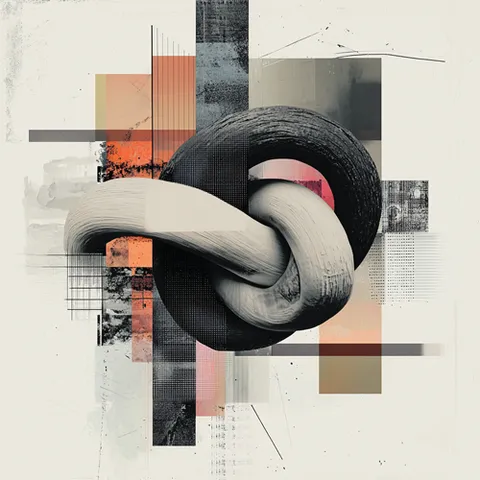
The Human Knot
The Human Knot is a collaborative exercise in which participants work together to untangle a "knot" created by intertwining their hands, fostering communication skills, teamwork, and problem-solving.
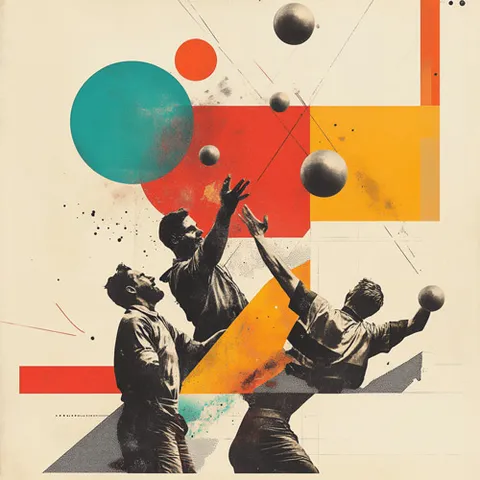
Throw and Catch
Throw and Catch is a collaborative activity where participants must coordinate to keep multiple balls in motion, fostering cooperation, focus, and teamwork.
Paper Airplanes
Paper Airplane Creation is a collaborative activity that simulates strategic decision-making through building and launching paper airplanes, illustrating how choices impact collective outcomes.
Collective Rube Goldberg Machine
Collective Rube Goldberg Machine is a participatory activity where teams collaboratively build a whimsical chain reaction device to perform a simple task, using creativity, problem-solving, and everyday materials to spark teamwork and fun experimentation.
Bizarre Bazaar
A creative game to spark imagination: in Bazaar Bizarro, the most ordinary objects become extraordinary products through improvisation, humor, and persuasion. Perfect for energizing groups and boosting self-expression.
Ball Sliding
Ball Sliding fosters teamwork and creativity by challenging participants to move a ball collaboratively without touching it.
Projection and creative planning activities
These activities help teams look forward with optimism, projecting goals, dreams, and intentions for the post-vacation period or other milestones of the year. Instead of feeling the return as a burden, these activities transform the perspective toward opportunities and new beginnings. Through visualization exercises, goal mapping, or collective purpose definition, teams channel the renewed energy from rest (or any transition) toward future projects with genuine motivation.
Golden circle
The golden circle is a strategic reflection tool based on Simon Sinek's model that guides people, teams, or organizations to clarify their purpose (Why), their methods (How), and their actions (What), always starting from the center.
Appreciative inquiry
Appreciative inquiry is an organizational and community change methodology that begins from what is already working well to build the desired future, rather than analyzing problems and deficits.
Open space
Open space (Open Space Technology) is a group self-organization methodology in which participants themselves create the agenda, choose the sessions, and define the topics of work, radically liberating collective intelligence without a pre-established program.
Now, Next, Later
Now, Next, Later organizes tasks based on their temporal priority to promote clarity, focus, and efficiency in planning.
Anticipating Challenges
Anticipating Challenges is a participatory activity in which teams imagine that their project has failed and analyze the possible reasons behind this scenario.
Six Thinking Hats
Edward de Bono's parallel thinking method: 6 structured perspectives — facts, emotions, caution, optimism, creativity, and process — for more complete group decisions with less conflict and cognitive bias.
Creative activities and playful mental stimulation
To gradually and pleasantly reactivate the mind after "rest" mode, these activities offer creative challenges that stimulate different cognitive areas without generating stress. From quick association games to lateral thinking exercises or collective artistic creation, these activities "warm up" the brain in a fun way, preparing it for more complex tasks without the pressure of immediate work demands.
Idea boxes
Idea boxes is a participatory activity designed to foster creativity and collaboration by collecting, sharing, and discussing ideas in a group setting.
Creative Stations
Creative Stations combine rotating and participatory activities to explore a topic from multiple perspectives, fostering creativity and active learning.
Affinity diagram
The Affinity Diagram is a visual and participatory tool that organizes ideas into categories to facilitate group analysis and informed decision-making.
Collaborative Benchmarking
Collaborative Benchmarking promotes continuous improvement through comparative analysis and the adaptation of successful practices to one's own context.

Brainstorming
Brainstorming fosters collective creativity and collaboration by generating multiple proposals to address a specific challenge.
Collaborative integration and cohesion games
The time of vacation separation may have temporarily fragmented the team's cohesion, especially if different people returned at different times. These activities reestablish the feeling of "being a team" through simple collaborative challenges that require coordination, communication, and cooperation. Without the pressure of real projects, these games allow the team to resynchronize naturally and enjoyably.
Model Building
Model Building is an activity that allows participants to represent ideas or solutions using simple materials, fostering creativity and hands-on learning.
Prototype gallery
The Prototype gallery is a participatory activity that allows teams to present initial models of their ideas, receive feedback, and collaboratively refine their proposals.
Investor role-playing
Investor role-playing is a strategic and engaging activity that simulates resource allocation to collectively evaluate and prioritize proposals.

Shelling Corn
Shelling Corn is a collaborative activity where participants shell corn to reflect on community, teamwork, and the value of individual contributions.
Word Search
Word Search is a collaborative activity where participants work in teams to find hidden words in a letter grid, promoting teamwork and observation skills.

Concept Route
The Concept Route organizes and connects key ideas through a collaborative visual journey, facilitating learning and the communication of complex topics.
Gratitude and renewed appreciation activities
Returning from vacation is a propitious moment for cultivating conscious appreciation for positive aspects of work that may have become invisible through routine. These activities invite team members to recognize and express gratitude for their colleagues, for work opportunities, or for aspects of the work environment they value. This practice not only improves the emotional climate of the return, but also strengthens intrinsic motivation and the sense of belonging.
Circle of gratitude
The Circle of gratitude promotes gratitude and mutual recognition among participants, strengthening group bonds and fostering a positive environment.
Stars
Las estrellas es una dinámica colaborativa donde los participantes reflejan sus fortalezas y contribuciones en un cielo colectivo, promoviendo la autovaloración, el sentido de pertenencia y la unidad grupal.
Safety Stories
The translation is perfect and reads naturally. No edits are needed. If you’d like, I can help you customize this content further depending on your audience or format (e.g., handouts, slide decks, training guides). Just let me know!
Informative Capsules
Informative Capsules are brief and dynamic presentations that deliver key information to prepare participants for subsequent activities.
The Letter
The Letter is a reflective activity that allows participants to write meaningful messages to explore emotions, thoughts, and personal connections.
Daily achievements board
The Daily achievements board is a visual and participatory tool for recording and celebrating daily progress, fostering motivation and reflective team analysis.
Strategies for implementing energizing activities in the post-vacation return
For energizing activities to be truly effective in facilitating workplace reintegration after vacation, they require sensitive and strategic implementation. It is not simply about doing "any fun activity," but about designing experiences that respond specifically to the psychological, social, and physical needs of this particular transition moment. The following are key strategies to maximize the impact of these activities:1. Recognize and validate the transition process
The first step is to create an environment that explicitly acknowledges that returning from vacation is a process, not an instant switch:- Normalize the difficulty of returning: Openly communicate that it is natural to feel resistance or sluggishness upon returning.
- Create realistic expectations: Don't expect maximum productivity immediately; the first day is for reintegration.
- Respect different rhythms: Some people reintegrate faster than others; avoid pressuring.
- Validate prior rest: Communicate that vacation time was important and valuable, not an "interruption."
- Set a welcoming tone: The return environment should feel like a warm welcome, not a heavy obligation.
2. Strategic timing of activities
The moment you implement activities is just as important as the activities themselves:- First hours of the first day: Dedicate the first part of the workday to reconnection activities before tasks.
- Before formal meetings: Start important meetings with brief 5–10 minute energizers.
- After periods of focused work: Use energizers as transitions between work blocks.
- Complete first week: Consider incorporating daily activities throughout the first week back.
- Staggered return: If the team returns on different dates, repeat key activities when the group is complete.
3. Graduate intensity appropriately
Energy recovers gradually, not all at once; activities should reflect this:- Start with low intensity: First activities should be gentle, calm, and low-risk.
- Increase gradually: As the day or week progresses, increase complexity and intensity.
- Read the group's signals: Observe the team's real energy levels and adjust accordingly.
- Avoid overload: Better to do a few activities well than many that overwhelm.
- Allow participation options: Respect that some prefer to observe at first.
4. Balance the personal with the professional
Post-vacation activities navigate the space between the personal and the professional:- Allow sharing without pressuring: Invite sharing of vacation experiences but respect privacy.
- Create structured formats: Offer clear frameworks for sharing that avoid discomfort.
- Balance personal and professional time: Dedicate space for personal reconnection but link it to work goals.
- Respect individual boundaries: Not everyone wants to share details of their personal time.
- Facilitate authentic connection: Create spaces for genuine, non-performative interactions.
5. Adapt activities to work modalities
Modern teams work in different configurations that require adaptations:- In-person teams: Take advantage of the shared physical space with movement activities.
- Remote teams: Use creative digital tools that generate connection at a distance.
- Hybrid teams: Design activities that integrate in-person and remote participants equitably.
- Globally distributed teams: Consider different time zones and cultural vacation contexts.
- Asynchronous reintegration: Create activities that can work even if not everyone is present simultaneously.
6. Link activities with organizational objectives
The best return activities connect renewed energy with work purposes:- Connect with organizational vision: Link activities to the organization's goals or values.
- Introduce new projects creatively: Use activities to present initiatives for the new period.
- Identify applicable learnings: Facilitate reflection on how aspects of rest can be applied to work.
- Co-create priorities: Use participatory activities to collectively define post-vacation priorities.
- Celebrate prior achievements: Recognize what was accomplished before vacation as a bridge to the return.
7. Take care of logistical and environmental aspects
The physical and logistical context significantly influences effectiveness:- Prepare the space in advance: Ensure the physical environment is welcoming and ready.
- Minimize logistical barriers: Avoid technical or material difficulties that ruin the activity.
- Provide snacks or coffee: Physical welcome elements reinforce the welcoming atmosphere.
- Take care of ambiance: Music, lighting, and subtle decoration can improve the environment.
- Eliminate artificial urgencies: Protect time dedicated to activities from urgent interruptions.
8. Measure impact and adjust continuously
Every team and every post-vacation return is unique; continuous evaluation is key:- Observe energy indicators: Note whether activities effectively elevate mood and activation.
- Request quick feedback: Briefly ask what worked and what to improve.
- Monitor productive reintegration: Evaluate whether the team recovers productivity more smoothly.
- Document what works: Create a repository of effective activities for future returns.
- Adjust for future occasions: Each vacation period may require slightly different approaches.