Back to School: Participatory Activities for the First Days of the School Year
Participatory Activities for the First Day and First Weeks of School
The first days of a new school year are a window of opportunity that only opens once a year: new group, new teacher, a chance to start fresh. For facilitators, these days shape the classroom culture for the entire year. Participatory activities for back-to-school are not simple 'icebreakers': they are tools for intentional community building. A classroom where people know each other, feel safe and have co-constructed their norms of coexistence learns in a qualitatively different way.Why does the first week matter so much?
- The explicit and implicit norms of coexistence and participation.
- The level of trust between peers and between students and teacher.
- The openness toward collaborative learning.
- The perception of whether the classroom is a safe space to make mistakes and ask questions.
Types of activities for the start of the school year
Icebreakers and introductions
These activities go beyond 'say your name': they create situations where participants discover genuine points of connection and move through the space, reducing the physical tension of the first encounter.
Two Truths and One Lie
Two Truths and One Lie helps break the ice and foster relationships through fun and interaction.
The Name Game
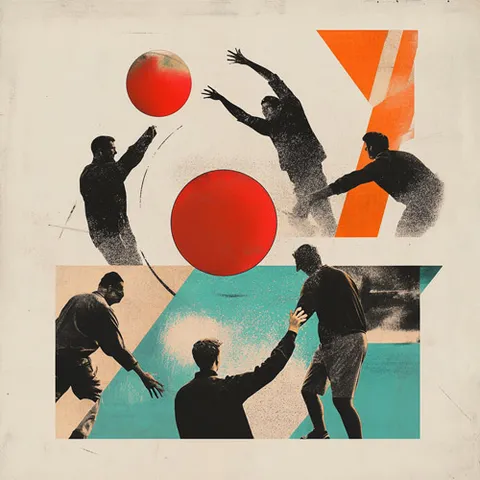
The Name Game is an interactive activity where participants throw a ball while saying the name of the person receiving it, promoting name memorization and group interaction.
Uncommon Commonalities
Uncommon Commonalities is a team-based activity where participants discover unusual habits or experiences they share, fostering group connection and creativity.
The Question Ball
The Question Ball is a playful and reflective activity where participants answer questions read by the facilitator upon receiving a ball, fostering group interaction in a fun and meaningful way.
Who Am I?
Who Am I? is an observation and feedback-based activity where teams compete by imitating members of the opposing team, challenging them to guess who is being portrayed. It encourages creativity and strengthens group collaboration.
Building group identity
A learning community is not declared — it is built. These activities help the group develop a shared sense of identity: who we are as a group, what unites us, what makes us unique.
Lifeline
The lifeline is a biographical narrative activity in which participants trace their personal or group history along a timeline, marking key moments, turning points, and the learning that brought them to the present.

Collective DIY Mascot
Collective DIY Mascot is a participatory activity in which a group builds a symbolic mascot together, adding one element at a time across weeks. The result is a creative, emotional representation of their collective identity.
Ball of thread
Ball of thread is a collaborative activity where participants build a symbolic thread network to reflect their connections, fostering group cohesion and teamwork.
Skills Mosaic
Skills Mosaic is a participatory activity that helps teams identify and visualize their collective strengths, fostering collaboration, trust, and mutual recognition.
The Spider Web
The Spider Web symbolically connects participants to visualize relationships and foster mutual understanding within a group.
Who Are We?
Who Are We? is a participatory team-building activity where participants identify their teammates through shared categories on assigned cards, creating groups in a fun and engaging way.
Participatory agreements and norms of coexistence
Imposed rules are obeyed; co-constructed agreements are sustained. These activities help the group define its own norms through deliberative processes. When students are the authors of classroom rules, their willingness to respect them is qualitatively different.
Restorative circle
The restorative circle is a structured community practice developed by Dominic Barter that brings together those who caused harm, those who were affected, and the community around them to build mutual understanding and co-create agreements for repair and forward movement.
Learning Contract
A co-designed agreement between learner and facilitator that defines goals, strategies, resources, and evidence of achievement. Builds metacognitive awareness, intrinsic motivation, and accountability.
Four Corners
Four Corners encourages dialogue and the exploration of perspectives by allowing participants to choose and analyze different positions within a group setting.
Dot Voting
Dot Voting is a participatory technique that combines analysis and prioritization to identify the most relevant proposals within a collective process, promoting collaboration and group consensus.
Confidence Vote
Confidence Vote is a fast participatory dynamic that lets groups gauge consensus, commitment levels, or uncertainty on a proposal by voting with hand signals or visual cues.
Fishbowl discussion
Fishbowl is a participatory dynamic where a small group dialogues in the center while others observe, promoting active listening, multiple perspectives and deep reflection on complex topics.
Activating meaningful learning
Every student arrives with a universe of experiences and prior knowledge. These activities make that universe visible and connect new content with the group's life experience, activating genuine curiosity as the engine of learning.
Learning puzzle
The Learning puzzle is an activity where participants learn and teach parts of a topic to collectively build a comprehensive understanding.

Think – Pair – Share: Individual Reflection, Pair Dialogue, Group Sharing
A 3-step dynamic that activates everyone's participation: think alone, talk in pairs, share with the group. Guarantees equitable engagement in education, training, and facilitation at any scale.
True or False
The True or False activity challenges concepts and promotes critical learning through the evaluation and discussion of relevant statements.
Challenge-Based Learning
Challenge-Based Learning connects learning with action by engaging participants in concrete problems that they must collaboratively solve.
The Nine Questions Technique
The Nine Questions Technique is a participatory methodology that provides a comprehensive structure for designing, planning, or evaluating projects. It promotes collective reflection and collaborative work by addressing all essential aspects of a project in an integrated way.
I Like, I Wish, I Wonder
I Like, I Wish, I Wonder is a participatory activity where people reflect on a shared experience by expressing what they appreciated, what they would improve, and what questions they are left with, creating a space for honest feedback, learning, and connection.
Collective projection of the school year
What better way to begin than to imagine together where you're headed? These activities invite the group to project what they will have learned, built and achieved by the end of the year. That shared vision becomes a north star that guides and motivates work throughout the year.
Golden circle
The golden circle is a strategic reflection tool based on Simon Sinek's model that guides people, teams, or organizations to clarify their purpose (Why), their methods (How), and their actions (What), always starting from the center.
Appreciative inquiry
Appreciative inquiry is an organizational and community change methodology that begins from what is already working well to build the desired future, rather than analyzing problems and deficits.
Time Capsule
Time Capsule is a reflective activity that allows participants to capture their current ideas, wishes, and learnings in a symbolic capsule to be opened in the future, fostering introspection and group cohesion.

Future scenarios
The Future Scenarios activity allows participants to imagine different development possibilities to anticipate risks, seize opportunities, and generate innovative ideas.
What If
What if fosters creativity and critical analysis by exploring hypothetical scenarios in a team setting.
Backward Planning
La Planificación retroactiva ayuda a identificar los pasos necesarios para lograr un objetivo trabajando desde el resultado final hacia el presente, promoviendo la estrategia y la claridad grupal.
Playful integration and physical activation
The body returns to school too. Activities involving movement, play and laughter activate group energy and reduce the tension of the first encounter. Collaborative play creates experiences of shared achievement that strengthen team spirit from day one.
The Human Knot
The Human Knot is a collaborative exercise in which participants work together to untangle a "knot" created by intertwining their hands, fostering communication skills, teamwork, and problem-solving.
Paper Frisbee
Paper Frisbee is a group energizer where participants use paper plates as frisbees, aiming to land them as close as possible to a target plate.
Throw and Catch
Throw and Catch is a collaborative activity where participants must coordinate to keep multiple balls in motion, fostering cooperation, focus, and teamwork.
The Strongest Bridge
The Strongest Bridge is a collaborative activity where teams design and build bridges that must withstand progressively heavier weights, reflecting on resource optimization, collaboration, and creativity in practical scenarios.
Ball Sliding
Ball Sliding fosters teamwork and creativity by challenging participants to move a ball collaboratively without touching it.
Paper Airplanes
Paper Airplane Creation is a collaborative activity that simulates strategic decision-making through building and launching paper airplanes, illustrating how choices impact collective outcomes.
Strategies for Making the Most of the First Week of School
1. Design with purpose, not filler
Each activity in the first week should fulfill at least one of these purposes: participants get to know each other better; the group builds something in common; norms emerge from the group itself; or curiosity and the desire to learn are activated.2. Graduate personal exposure
- Day 1: Low emotional risk activities (fun facts, surface preferences).
- Days 2–3: Greater depth (experiences, expectations, fears for the year).
- Week 2: Greater vulnerability (personal stories, values, dreams).
3. Document and remember what was built
- Create a visible mural or document with the group's agreements.
- Photograph or record the collective products of activities.
- Revisit the agreements and the year's vision at key moments throughout the year.