Active and Participatory Methodologies for Promoting Meaningful Learning
Meaningful Learning
Meaningful learning represents an epistemological break with traditional memorization-based models, establishing connections between new content and the student's prior knowledge. This approach recognizes that learners are not mere empty containers but subjects with experiences and cognitive structures that condition how they incorporate new knowledge. Methods such as problem-based learning or interdisciplinary projects transform the traditionally "passive students" into active protagonists who connect knowledge with their realities and needs. This repositioning not only enriches the process with intrinsic motivation, but also enhances long-term retention and the transfer of learning to new situations, building deep understandings rather than superficial memorization.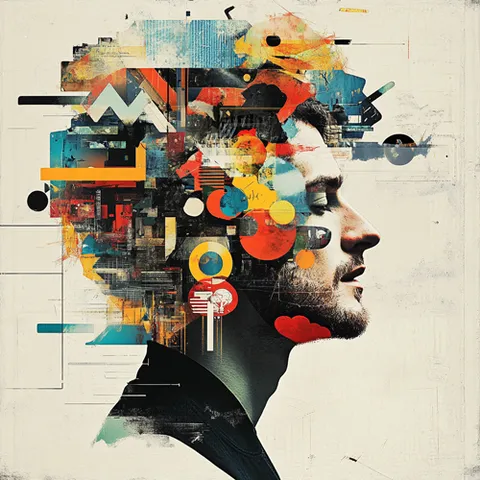
Creation of instructional resources
The Creation of instructional resources is a participatory activity that allows participants to design educational tools while consolidating their learning and developing creative skills.
Creative Stations
Creative Stations combine rotating and participatory activities to explore a topic from multiple perspectives, fostering creativity and active learning.

Favorite Little Things
Favorite Little Things is a warm participatory activity that invites people to share the small everyday moments that bring them joy, building connection and appreciation within the group.
Guided Visualizations
Guided Visualizations is a participatory activity where participants co-create a visualization in a chain format, exploring creativity and group connection through collective storytelling. It is ideal for fostering reflection, relaxation, and shared imagination.
Learning puzzle
The Learning puzzle is an activity where participants learn and teach parts of a topic to collectively build a comprehensive understanding.

Memory Game
Juego de la memoria es una dinámica lúdica y colaborativa donde los participantes emparejan tarjetas relacionadas para explorar conceptos, promover el aprendizaje y fomentar el trabajo en equipo.
Narrative workshop
Engage in a Narrative workshop to share stories, foster empathy, and build collective solutions. Ideal for team building, reflection, and creative problem-solving.

Shelling Corn
Shelling Corn is a collaborative activity where participants shell corn to reflect on community, teamwork, and the value of individual contributions.

The Nine Questions Technique
The Nine Questions Technique is a participatory methodology that provides a comprehensive structure for designing, planning, or evaluating projects. It promotes collective reflection and collaborative work by addressing all essential aspects of a project in an integrated way.
Collaborative Learning
Collaborative learning moves beyond traditional individualistic approaches to build processes where knowledge emerges from social interaction and peer dialogue. This approach is based on the recognition that learning is a social phenomenon and the premise that collective constructions are often richer than individual ones. Methodologies such as learning communities or research teams facilitate experiences where students develop social skills while deepening content knowledge. The real challenge lies in balancing individual contributions with group dynamics, creating spaces where diversity of perspectives enriches the experience and where the zone of proximal development is leveraged through peer mediation.
After Action Review (AAR)
Structured debrief with four questions for learning immediately after any project: what was planned, what happened, why the gap, and what to do differently next time.
Art Trail
Art Trail is a collaborative activity in which participants intervene in a public or community space through collective artistic actions, aiming to reframe and transform it into a unique, meaningful, and shared place for the community.

Ball Sliding
Ball Sliding fosters teamwork and creativity by challenging participants to move a ball collaboratively without touching it.

Chronological Review
The Chronological Review is a participatory activity that analyzes progress by comparing it to the planned timeline, promoting adjustments and reflections to ensure the project's success.
Circle of gratitude
The Circle of gratitude promotes gratitude and mutual recognition among participants, strengthening group bonds and fostering a positive environment.

Collaborative Competition
Collaborative Competition is an activity that combines teamwork with problem-solving in a friendly, competitive format to foster creativity and learning.
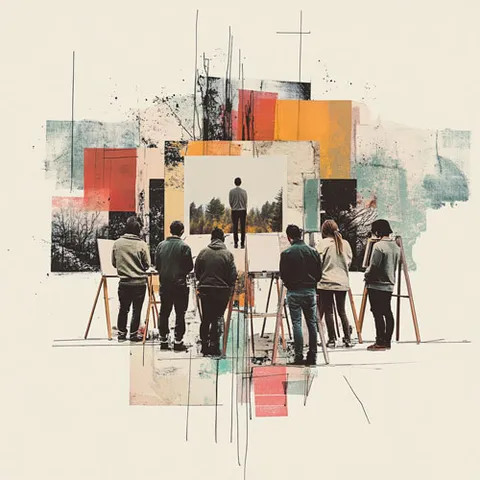
Collaborative Life Drawing
Collaborative Live Drawing is an artistic and group-based activity where participants take turns drawing on each other's sheets, based on observation sessions with live models or objects. The constant rotation promotes collaboration, the exploration of multiple styles, and a collective reflection on perception, the body, and shared creation.
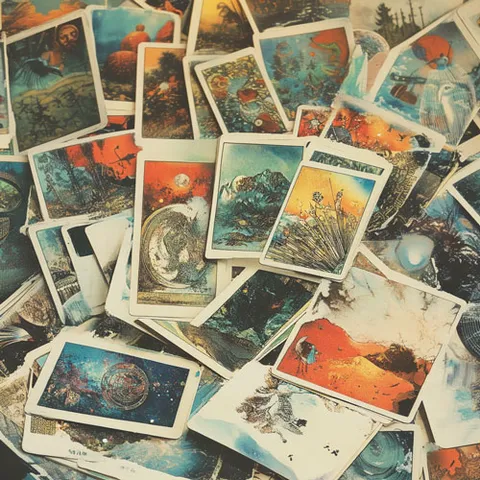
Collaborative Oracle Card Creation
Collaborative Oracle Card Creation is a participatory activity where participants co-design a deck of oracle cards with meaningful symbols and messages, fostering creativity and collective reflection.

Collective DIY Mascot
Collective DIY Mascot is a participatory activity in which a group builds a symbolic mascot together, adding one element at a time across weeks. The result is a creative, emotional representation of their collective identity.

Collective Journal
The Collective Journal is a participatory activity that allows groups to record daily progress, reflections, and learnings, fostering continuous improvement and collaborative documentation.
Collective Questionnaire
The Collective Questionnaire is a participatory dynamic that enables the collaborative design of key questions, ensuring their relevance and usefulness for the project's or research’s purpose.

Collective Rube Goldberg Machine
Collective Rube Goldberg Machine is a participatory activity where teams collaboratively build a whimsical chain reaction device to perform a simple task, using creativity, problem-solving, and everyday materials to spark teamwork and fun experimentation.
Active Participation
Active participation is a fundamental principle that transforms the student's role from spectator to protagonist of the educational process. This methodology integrates cognitive, emotional and procedural dimensions to involve the learner in all phases of the process: from the definition of objectives to evaluation. Techniques such as flipped classrooms or experiential learning methodologies enable students to take on increasing responsibilities in their own process. The strength of this approach lies in its capacity to develop autonomy, stimulate intrinsic motivation and establish self-regulated learning habits that transcend the classroom and extend to lifelong learning.After Action Review (AAR)
Structured debrief with four questions for learning immediately after any project: what was planned, what happened, why the gap, and what to do differently next time.

Ball of thread
Ball of thread is a collaborative activity where participants build a symbolic thread network to reflect their connections, fostering group cohesion and teamwork.
Collective DIY Mascot
Collective DIY Mascot is a participatory activity in which a group builds a symbolic mascot together, adding one element at a time across weeks. The result is a creative, emotional representation of their collective identity.

Community Auction
The Community Auction is an activity where projects symbolically compete for resources, fostering collective evaluation and critical analysis of priorities.

Community Planting Day
Community Planting Day is a participatory dynamic where a group comes together to plant vegetation in a shared space, promoting environmental awareness, social connection, and collective responsibility.

Customer Journey Mapping
Visualize a person's complete experience with your service step by step, uncovering emotions, pain points, and improvement opportunities at every touchpoint.
Design Sprint
Five-day method for going from a complex problem to a tested prototype — compressing months of design iteration into one focused week with real user feedback on day five.
Design Thinking Workshop
Innovation methodology in 5 phases: Empathize, Define, Ideate, Prototype, Test. Learn to facilitate Design Thinking workshops centered on people's real needs.
Favorite Little Things
Favorite Little Things is a warm participatory activity that invites people to share the small everyday moments that bring them joy, building connection and appreciation within the group.
Fishbowl discussion
Fishbowl is a participatory dynamic where a small group dialogues in the center while others observe, promoting active listening, multiple perspectives and deep reflection on complex topics.

Focus Group
Qualitative research method: moderated small-group discussion to explore participants' perceptions, attitudes, and lived experiences on a specific topic in depth.

I Like, I Wish, I Wonder
I Like, I Wish, I Wonder is a participatory activity where people reflect on a shared experience by expressing what they appreciated, what they would improve, and what questions they are left with, creating a space for honest feedback, learning, and connection.
Critical Thinking
Critical thinking transforms one of the most crucial moments in learning processes: the evaluation and analysis of information. This methodology establishes reflective spaces where knowledge is rigorously examined, integrating logical reasoning skills with the capacity to question assumptions and consider alternative perspectives. Tools such as structured debates or visible thinking routines facilitate processes where students learn to formulate deep questions and examine evidence. The true value of this approach lies in its capacity to form citizens capable of navigating critically in a world saturated with information, distinguishing facts from opinions and making decisions grounded in solid reasoning.
Anticipating Challenges
Anticipating Challenges is a participatory activity in which teams imagine that their project has failed and analyze the possible reasons behind this scenario.

Back-to-Back Drawing
Back-to-Back Drawing is a participatory activity in which participants work in pairs to describe and reproduce an image without seeing it, fostering communication and active listening skills.

Backward Planning
La Planificación retroactiva ayuda a identificar los pasos necesarios para lograr un objetivo trabajando desde el resultado final hacia el presente, promoviendo la estrategia y la claridad grupal.

Challenge-Based Learning
Challenge-Based Learning connects learning with action by engaging participants in concrete problems that they must collaboratively solve.
Circle of gratitude
The Circle of gratitude promotes gratitude and mutual recognition among participants, strengthening group bonds and fostering a positive environment.

Concept Route
The Concept Route organizes and connects key ideas through a collaborative visual journey, facilitating learning and the communication of complex topics.
Confidence Vote
Confidence Vote is a fast participatory dynamic that lets groups gauge consensus, commitment levels, or uncertainty on a proposal by voting with hand signals or visual cues.

Data-driven decisions
Data-driven decisions is a collaborative activity designed to help teams classify key questions, explore research methods, and balance qualitative and quantitative insights to drive better decision-making.
Decision maze
The Decision maze guides participants through paths and challenges that simulate real decision-making processes, promoting critical and collaborative learning.

Epic Failure
Epic Failure is a participatory activity that invites people to reframe and share failures as valuable learning experiences, turning setbacks into collective strength and resilience.
Film Society
Film Society is a participatory activity that combines a collective film screening with a facilitated critical discussion to foster empathy, reflection, and shared meaning-making.
Fishbowl discussion
Fishbowl is a participatory dynamic where a small group dialogues in the center while others observe, promoting active listening, multiple perspectives and deep reflection on complex topics.
Knowledge Construction
Knowledge construction represents a mode of learning that dissolves the artificial separation between theory and practice, establishing iterative cycles where reflection informs action and action nourishes new reflections. This approach breaks with the traditional linearity of educational processes to create knowledge spirals that evolve continuously. Methodologies such as project-based learning or creation labs configure processes where knowledge is generated through the resolution of real problems. The transformative power of this approach lies in its capacity to organically connect curricular content with practical application, simultaneously developing deep conceptual understandings and competencies for action in authentic contexts.Fishbowl discussion
Fishbowl is a participatory dynamic where a small group dialogues in the center while others observe, promoting active listening, multiple perspectives and deep reflection on complex topics.

Learning Contract
A co-designed agreement between learner and facilitator that defines goals, strategies, resources, and evidence of achievement. Builds metacognitive awareness, intrinsic motivation, and accountability.

Think – Pair – Share: Individual Reflection, Pair Dialogue, Group Sharing
A 3-step dynamic that activates everyone's participation: think alone, talk in pairs, share with the group. Guarantees equitable engagement in education, training, and facilitation at any scale.
After Action Review (AAR)
Structured debrief with four questions for learning immediately after any project: what was planned, what happened, why the gap, and what to do differently next time.
Art of Hosting
A facilitation framework for hosting meaningful conversations at scale. Integrates World Café, Open Space, and Circle practice to harvest collective wisdom from groups of 20 to 150.
Back-to-Back Drawing
Back-to-Back Drawing is a participatory activity in which participants work in pairs to describe and reproduce an image without seeing it, fostering communication and active listening skills.

Brainstorming
Brainstorming fosters collective creativity and collaboration by generating multiple proposals to address a specific challenge.
Circle of gratitude
The Circle of gratitude promotes gratitude and mutual recognition among participants, strengthening group bonds and fostering a positive environment.
Circular Conversations
Circular Conversations is a group activity that combines movement and interaction to foster meaningful connections among participants.
Collaborative Competition
Collaborative Competition is an activity that combines teamwork with problem-solving in a friendly, competitive format to foster creativity and learning.
Collaborative Life Drawing
Collaborative Live Drawing is an artistic and group-based activity where participants take turns drawing on each other's sheets, based on observation sessions with live models or objects. The constant rotation promotes collaboration, the exploration of multiple styles, and a collective reflection on perception, the body, and shared creation.
Collaborative mind map
The Collaborative mind map is a visual tool that allows groups to explore, organize, and connect ideas on a topic in a creative and participatory way.
Collective Reflection
Participatory collective reflection transcends individualistic approaches focused exclusively on personal development to build spaces of shared metacognition. This methodology integrates self-knowledge with the social construction of learning, recognizing the importance of interactions in the consolidation of deep understandings. Methodologies such as classroom assemblies or learning circles facilitate processes where students jointly analyze their cognitive and socio-emotional processes. The richness of this approach lies in its capacity to develop metacognitive skills, build distributed knowledge and value qualitative dimensions such as the development of empathy or the ability to integrate diverse perspectives that often elude conventional evaluations.
Activity clock
The Activity clock invites participants to organize and balance their daily time through an effective visual representation.
Ball of thread
Ball of thread is a collaborative activity where participants build a symbolic thread network to reflect their connections, fostering group cohesion and teamwork.

Collaborative Benchmarking
Collaborative Benchmarking promotes continuous improvement through comparative analysis and the adaptation of successful practices to one's own context.
Collaborative data portrait
Collaborative Data Portrait is a visual activity where participants create a group portrait using graphically represented data, fostering self-expression and team connection.
Collaborative Life Drawing
Collaborative Live Drawing is an artistic and group-based activity where participants take turns drawing on each other's sheets, based on observation sessions with live models or objects. The constant rotation promotes collaboration, the exploration of multiple styles, and a collective reflection on perception, the body, and shared creation.
Collective Journal
The Collective Journal is a participatory activity that allows groups to record daily progress, reflections, and learnings, fostering continuous improvement and collaborative documentation.
Confidence Vote
Confidence Vote is a fast participatory dynamic that lets groups gauge consensus, commitment levels, or uncertainty on a proposal by voting with hand signals or visual cues.
Decision maze
The Decision maze guides participants through paths and challenges that simulate real decision-making processes, promoting critical and collaborative learning.
Epic Failure
Epic Failure is a participatory activity that invites people to reframe and share failures as valuable learning experiences, turning setbacks into collective strength and resilience.
Film Society
Film Society is a participatory activity that combines a collective film screening with a facilitated critical discussion to foster empathy, reflection, and shared meaning-making.
Four Corners
Four Corners encourages dialogue and the exploration of perspectives by allowing participants to choose and analyze different positions within a group setting.

GROW Coaching
GROW Coaching is a collaborative activity that uses the GROW model to foster coaching skills and personal reflection, creating meaningful connections among participants.
Collaborative Analysis
Collaborative analysis transforms the approach to complex problems by integrating multiple perspectives within a framework of shared inquiry. This approach overcomes the limitations of individual analyses to create more holistic and nuanced understandings that emerge from structured dialogue among diverse points of view. Methodologies such as collective case study or critical incident analysis facilitate the construction of interpretations enriched by the group's cognitive diversity. The power of this approach lies in its capacity to address complexity from complementary perspectives, generate innovative solutions through cross-pollination of ideas and strengthen shared commitment to collectively reached conclusions.Data-driven decisions
Data-driven decisions is a collaborative activity designed to help teams classify key questions, explore research methods, and balance qualitative and quantitative insights to drive better decision-making.
Role Simulation
Role Simulation is a participatory activity in which participants work in teams to create and act out different scenarios, exploring possible outcomes, dialogues, and decisions.
Thematic Committees
Thematic Committees are working groups that analyze specific proposals in key areas, promoting informed and strategic decisions through active participation and collaboration.

Urban Sketching
Urban Sketching is a participatory activity where individuals draw real-life urban or community spaces through direct observation. It encourages artistic expression, fosters a deeper connection with the environment, and transforms everyday places into sources of inspiration and shared reflection.
Comparative Photography
Comparative Photography is a visual and participatory tool for documenting and analyzing changes before and after an intervention, fostering collective reflection on the impact achieved.

Interaction map
The Interaction map is a visual activity that enables participants to identify and analyze key relationships within a system to make informed decisions.
Wheel of common interests
The Common Interests Wheel connects participants through hobbies and affinities, promoting interaction and establishing foundations for future group collaborations.
Teamwork
Teamwork constitutes much more than a methodology; it represents a fundamental competency in contemporary educational and professional settings. This approach transcends the simple grouping of individuals to create true synergies where the collective result surpasses the sum of individual contributions. Methodologies such as high-performance teams or rotating roles facilitate the development of fundamental skills such as effective communication, conflict management and shared leadership. The relevance of this approach lies not only in its capacity to improve academic outcomes but also in its potential to develop crucial social competencies for global citizenship and the collaborative work environments of the twenty-first century.Anticipating Challenges
Anticipating Challenges is a participatory activity in which teams imagine that their project has failed and analyze the possible reasons behind this scenario.
Art Trail
Art Trail is a collaborative activity in which participants intervene in a public or community space through collective artistic actions, aiming to reframe and transform it into a unique, meaningful, and shared place for the community.
Back-to-Back Drawing
Back-to-Back Drawing is a participatory activity in which participants work in pairs to describe and reproduce an image without seeing it, fostering communication and active listening skills.
Ball of thread
Ball of thread is a collaborative activity where participants build a symbolic thread network to reflect their connections, fostering group cohesion and teamwork.
Ball Sliding
Ball Sliding fosters teamwork and creativity by challenging participants to move a ball collaboratively without touching it.

Bizarre Bazaar
A creative game to spark imagination: in Bazaar Bizarro, the most ordinary objects become extraordinary products through improvisation, humor, and persuasion. Perfect for energizing groups and boosting self-expression.

Broken Telephone
Broken Telephone is a collaborative game that demonstrates how messages change when passed along, fostering communication skills, active listening, and creativity.
Cascade Greeting
Cascade Greeting is a closing activity where participants greet each other progressively, wishing one another well for the future and creating an atmosphere of gratitude and interpersonal connection.
Circle of gratitude
The Circle of gratitude promotes gratitude and mutual recognition among participants, strengthening group bonds and fostering a positive environment.
Collaborative Competition
Collaborative Competition is an activity that combines teamwork with problem-solving in a friendly, competitive format to foster creativity and learning.
Collaborative Oracle Card Creation
Collaborative Oracle Card Creation is a participatory activity where participants co-design a deck of oracle cards with meaningful symbols and messages, fostering creativity and collective reflection.

Community Garden
Community garden is a participatory activity in which neighbors, students, or community groups come together to create and care for a garden in a shared space. Through collaborative work, they grow food, exchange knowledge, and strengthen their connection with the environment and the community.
Active and participatory methodologies represent much more than a set of didactic techniques; they constitute an ethical, pedagogical and epistemological approach that reconfigures educational relationships. In contexts marked by student diversity and the complexity of contemporary challenges, these approaches offer promising paths for the construction of truly meaningful and transformative learning. Their true value lies not in their methodological sophistication but in their capacity to humanize educational processes, reclaiming the dignity and agency of students. These methodologies demonstrate, in daily practice, that it is possible to teach rigorously without instrumentalizing learners and that effective educational experiences can be built while respecting autonomy and prior knowledge. Ultimately, they represent a commitment to the deep democratization of knowledge and the integral development of people.