Collaborative Games for Corporate Training
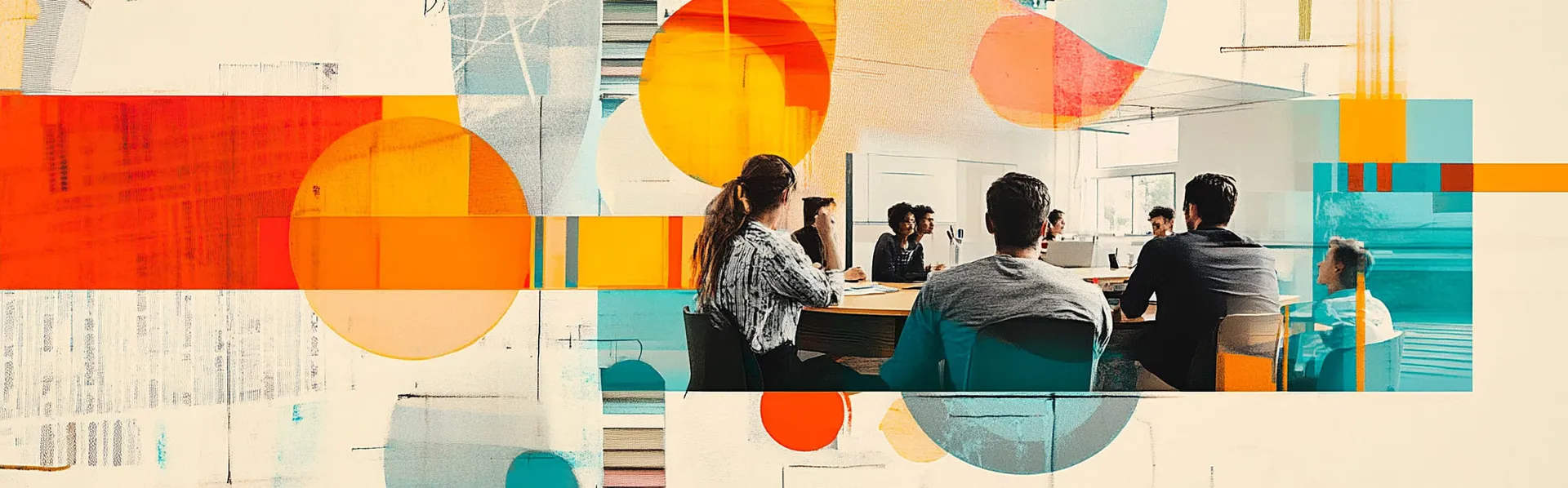
Strategies to transform corporate learning into participatory, meaningful experiences
Traditional corporate training faces a fundamental challenge: how to transmit knowledge and develop competencies in ways that are truly internalized, applied, and generate lasting behavioral change within organizations. Faced with passive presentations and one-directional formats that frequently result in low engagement and limited retention, collaborative games for corporate training represent a different paradigm of organizational learning. These participatory methodologies transform training sessions into active experiences where participants do not merely receive information but discover it, practice it, question it, and integrate it through playful challenges that require collaboration, reflection, and practical application. Collaborative games in corporate training contexts go far beyond entertainment. They are pedagogical tools strategically designed to leverage principles of experiential learning, cognitive neuroscience, and group psychology to create optimal conditions for competency development. Through simulations, problem-solving challenges, collaborative role-playing, and practical application activities, these games allow teams to experience concepts rather than just hear them, practice skills in safe environments before applying them in real situations, and build collective understanding that strengthens both individual learning and the team's collaborative capacity. This type of activity is also known as: corporate experiential learning activities, educational team-building exercises, participatory training dynamics, playful training methodologies, organizational competency development games, or active corporate training techniques.Why integrate collaborative games into corporate training?
Research on adult learning and organizational development consistently shows that participatory and experiential methodologies generate superior results compared to traditional passive approaches. Adults learn better by doing than by listening, through practice rather than isolated theory, and when they can connect new concepts with concrete experiences that are meaningful to them. Collaborative games in corporate training respond to these adult learning principles, offering multiple strategic advantages:- Significant increase in engagement and active participation during training.
- Improved retention of information and concepts through practical experience.
- Simultaneous development of technical competencies and collaborative skills.
- Creation of safe spaces to experiment, make mistakes, and learn without real risk.
- Strengthening relationships among participants that facilitates future collaboration.
- Experiential identification of knowledge or skill gaps.
- Generation of collective insights that enrich individual learning.
- Facilitation of learning transfer from training to real work.
- Transformation of training from a boring obligation to a valued experience.
Types of collaborative games for corporate training
Simulation and collaborative role-playing games
These activities create simulated scenarios where participants take on roles and face realistic situations that require applying the training concepts. From negotiation simulations to customer service scenarios or organizational crises, these games allow practicing complex competencies in controlled contexts where mistakes become learning opportunities rather than real consequences. They are especially effective for developing interpersonal skills, decision-making, and applying conceptual frameworks to concrete situations.
Art Trail
Art Trail is a collaborative activity in which participants intervene in a public or community space through collective artistic actions, aiming to reframe and transform it into a unique, meaningful, and shared place for the community.
Back-to-Back Drawing
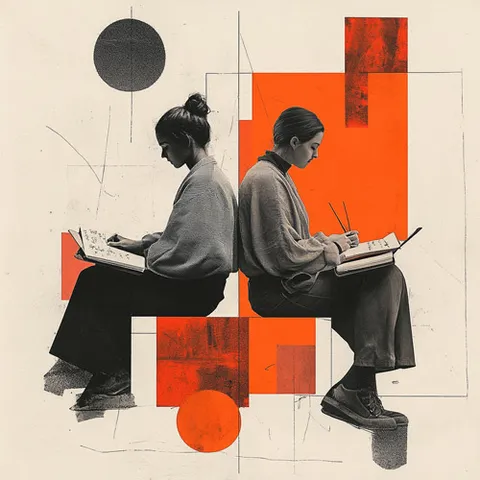
Back-to-Back Drawing is a participatory activity in which participants work in pairs to describe and reproduce an image without seeing it, fostering communication and active listening skills.

Ball Sliding
Ball Sliding fosters teamwork and creativity by challenging participants to move a ball collaboratively without touching it.

Bizarre Bazaar
A creative game to spark imagination: in Bazaar Bizarro, the most ordinary objects become extraordinary products through improvisation, humor, and persuasion. Perfect for energizing groups and boosting self-expression.

Collaborative Competition
Collaborative Competition is an activity that combines teamwork with problem-solving in a friendly, competitive format to foster creativity and learning.
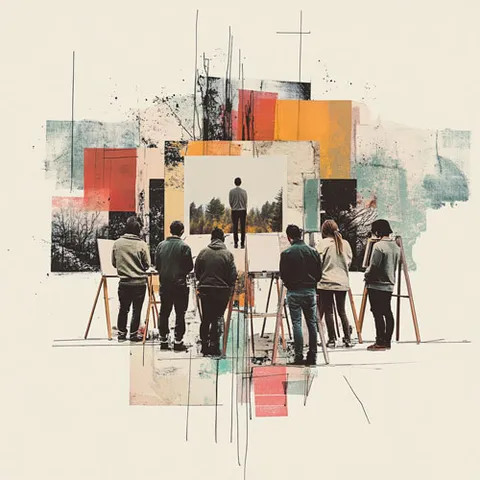
Collaborative Life Drawing
Collaborative Live Drawing is an artistic and group-based activity where participants take turns drawing on each other's sheets, based on observation sessions with live models or objects. The constant rotation promotes collaboration, the exploration of multiple styles, and a collective reflection on perception, the body, and shared creation.

Collective DIY Mascot
Collective DIY Mascot is a participatory activity in which a group builds a symbolic mascot together, adding one element at a time across weeks. The result is a creative, emotional representation of their collective identity.

Community Garden
Community garden is a participatory activity in which neighbors, students, or community groups come together to create and care for a garden in a shared space. Through collaborative work, they grow food, exchange knowledge, and strengthen their connection with the environment and the community.

Community Planting Day
Community Planting Day is a participatory dynamic where a group comes together to plant vegetation in a shared space, promoting environmental awareness, social connection, and collective responsibility.

Connecting People
Connecting People is a collaborative activity where participants interact based on observable descriptions, encouraging interaction, mutual understanding, and group fun.

Critical Incident
The Critical Incident activity is based on experiential learning techniques and reflective analysis to turn challenges into opportunities for growth.

Diaporama
Diaporama is a creative activity where participants collaborate to create and present a series of images or slides that narrate a story or concept, fostering visual communication and critical thinking.
Collaborative problem-solving challenges
These games present problems or puzzles that can only be solved through effective team collaboration, applying principles or tools taught in the training. From collective constructions with limited materials to thematic escape rooms related to training content, these activities require participants to coordinate, communicate, delegate, and synthesize information collectively. They develop both the specific competencies of the training and meta-skills of teamwork.
Anticipating Challenges
Anticipating Challenges is a participatory activity in which teams imagine that their project has failed and analyze the possible reasons behind this scenario.
Art Trail
Art Trail is a collaborative activity in which participants intervene in a public or community space through collective artistic actions, aiming to reframe and transform it into a unique, meaningful, and shared place for the community.
Back-to-Back Drawing
Back-to-Back Drawing is a participatory activity in which participants work in pairs to describe and reproduce an image without seeing it, fostering communication and active listening skills.

Ball of thread
Ball of thread is a collaborative activity where participants build a symbolic thread network to reflect their connections, fostering group cohesion and teamwork.
Ball Sliding
Ball Sliding fosters teamwork and creativity by challenging participants to move a ball collaboratively without touching it.
Bizarre Bazaar
A creative game to spark imagination: in Bazaar Bizarro, the most ordinary objects become extraordinary products through improvisation, humor, and persuasion. Perfect for energizing groups and boosting self-expression.

Broken Telephone
Broken Telephone is a collaborative game that demonstrates how messages change when passed along, fostering communication skills, active listening, and creativity.
Cascade Greeting
Cascade Greeting is a closing activity where participants greet each other progressively, wishing one another well for the future and creating an atmosphere of gratitude and interpersonal connection.
Circle of gratitude
The Circle of gratitude promotes gratitude and mutual recognition among participants, strengthening group bonds and fostering a positive environment.
Collaborative Competition
Collaborative Competition is an activity that combines teamwork with problem-solving in a friendly, competitive format to foster creativity and learning.
Collaborative Oracle Card Creation
Collaborative Oracle Card Creation is a participatory activity where participants co-design a deck of oracle cards with meaningful symbols and messages, fostering creativity and collective reflection.
Community Garden
Community garden is a participatory activity in which neighbors, students, or community groups come together to create and care for a garden in a shared space. Through collaborative work, they grow food, exchange knowledge, and strengthen their connection with the environment and the community.
Practical application and interactive case study games
These dynamics transform traditional case studies into participatory experiences where teams must analyze real or realistic situations, identify problems, propose solutions, and defend their approaches. Through formats like fishbowls where some teams present while others observe and give feedback, or analysis exercises with multiple teams working on the same case, these games develop critical thinking, collaborative analysis, and argumentation skills while applying training frameworks to concrete contexts.
Data-driven decisions
Data-driven decisions is a collaborative activity designed to help teams classify key questions, explore research methods, and balance qualitative and quantitative insights to drive better decision-making.
Role Simulation
Role Simulation is a participatory activity in which participants work in teams to create and act out different scenarios, exploring possible outcomes, dialogues, and decisions.
Thematic Committees
Thematic Committees are working groups that analyze specific proposals in key areas, promoting informed and strategic decisions through active participation and collaboration.

Urban Sketching
Urban Sketching is a participatory activity where individuals draw real-life urban or community spaces through direct observation. It encourages artistic expression, fosters a deeper connection with the environment, and transforms everyday places into sources of inspiration and shared reflection.
Anticipating Challenges
Anticipating Challenges is a participatory activity in which teams imagine that their project has failed and analyze the possible reasons behind this scenario.
Back-to-Back Drawing
Back-to-Back Drawing is a participatory activity in which participants work in pairs to describe and reproduce an image without seeing it, fostering communication and active listening skills.

Backward Planning
La Planificación retroactiva ayuda a identificar los pasos necesarios para lograr un objetivo trabajando desde el resultado final hacia el presente, promoviendo la estrategia y la claridad grupal.

Challenge-Based Learning
Challenge-Based Learning connects learning with action by engaging participants in concrete problems that they must collaboratively solve.
Circle of gratitude
The Circle of gratitude promotes gratitude and mutual recognition among participants, strengthening group bonds and fostering a positive environment.

Concept Route
The Concept Route organizes and connects key ideas through a collaborative visual journey, facilitating learning and the communication of complex topics.

Confidence Vote
Confidence Vote is a fast participatory dynamic that lets groups gauge consensus, commitment levels, or uncertainty on a proposal by voting with hand signals or visual cues.
Decision maze
The Decision maze guides participants through paths and challenges that simulate real decision-making processes, promoting critical and collaborative learning.
Co-creation and collaborative design activities
These games invite participants to create something new collectively by applying training concepts: designing a process, proposing an innovative solution, developing a product or service prototype, or creating a strategy. Through methodologies like design thinking, rapid prototyping, or visual strategic planning, these activities generate tangible products that represent collective learning while developing innovation competencies, collaborative creativity, and design thinking.
Collective Rube Goldberg Machine
Collective Rube Goldberg Machine is a participatory activity where teams collaboratively build a whimsical chain reaction device to perform a simple task, using creativity, problem-solving, and everyday materials to spark teamwork and fun experimentation.
Crazy 8
Crazy 8 is a fast-paced brainstorming activity designed to spark creativity and generate innovative solutions by sketching eight ideas in eight minutes. Perfect for teams aiming to think outside the box!
Diaporama
Diaporama is a creative activity where participants collaborate to create and present a series of images or slides that narrate a story or concept, fostering visual communication and critical thinking.

Idea Storm
Idea Storm is a collaborative activity inspired by Round Robin that fosters co-creation and innovation through the development and improvement of collective ideas.
Paper Airplanes
Paper Airplane Creation is a collaborative activity that simulates strategic decision-making through building and launching paper airplanes, illustrating how choices impact collective outcomes.

Radiodrama
Radiodrama is a collaborative activity where participants create audio narratives using effects, voices, and sounds to convey messages or tell stories in a creative way.

The Iceberg Model
The Iceberg Model is a mindful methodology that analyzes both visible and hidden aspects of products and services to foster sustainable and strategic design.
The Ladder of Abstraction
The Ladder of Abstraction is an activity that guides participants in reframing problems through both expansive and specific approaches, fostering strategic and innovative solutions.

The Strongest Bridge
The Strongest Bridge is a collaborative activity where teams design and build bridges that must withstand progressively heavier weights, reflecting on resource optimization, collaboration, and creativity in practical scenarios.

Collaborative Benchmarking
Collaborative Benchmarking promotes continuous improvement through comparative analysis and the adaptation of successful practices to one's own context.

Creative Mark Exploration
Creative Mark Exploration is a participatory activity that encourages experimentation with strokes and textures to discover personal styles.
Heat Map Voting
Heat Map Voting is a visual and collaborative technique for prioritizing key aspects within a set of ideas by distributing multiple votes across specific elements.
Collective reflection and peer-learning games
These dynamics create structured spaces where participants learn from each other by sharing experiences, knowledge, and perspectives related to training content. From thematic open space to knowledge fairs where different people or teams present aspects of the content, or dialogue circles on applying concepts, these games recognize that the group's collective expertise is a learning resource as valuable as the formal training content.
Affinity diagram
The Affinity Diagram is a visual and participatory tool that organizes ideas into categories to facilitate group analysis and informed decision-making.
Art of Hosting
A facilitation framework for hosting meaningful conversations at scale. Integrates World Café, Open Space, and Circle practice to harvest collective wisdom from groups of 20 to 150.
Cascade Greeting
Cascade Greeting is a closing activity where participants greet each other progressively, wishing one another well for the future and creating an atmosphere of gratitude and interpersonal connection.

Chronological Review
The Chronological Review is a participatory activity that analyzes progress by comparing it to the planned timeline, promoting adjustments and reflections to ensure the project's success.
Circle of gratitude
The Circle of gratitude promotes gratitude and mutual recognition among participants, strengthening group bonds and fostering a positive environment.
Collaborative Life Drawing
Collaborative Live Drawing is an artistic and group-based activity where participants take turns drawing on each other's sheets, based on observation sessions with live models or objects. The constant rotation promotes collaboration, the exploration of multiple styles, and a collective reflection on perception, the body, and shared creation.
Collective DIY Mascot
Collective DIY Mascot is a participatory activity in which a group builds a symbolic mascot together, adding one element at a time across weeks. The result is a creative, emotional representation of their collective identity.
Collective Questionnaire
The Collective Questionnaire is a participatory dynamic that enables the collaborative design of key questions, ensuring their relevance and usefulness for the project's or research’s purpose.
Community Planting Day
Community Planting Day is a participatory dynamic where a group comes together to plant vegetation in a shared space, promoting environmental awareness, social connection, and collective responsibility.
Comparative Photography
Comparative Photography is a visual and participatory tool for documenting and analyzing changes before and after an intervention, fostering collective reflection on the impact achieved.
Confidence Vote
Confidence Vote is a fast participatory dynamic that lets groups gauge consensus, commitment levels, or uncertainty on a proposal by voting with hand signals or visual cues.
Critical Incident
The Critical Incident activity is based on experiential learning techniques and reflective analysis to turn challenges into opportunities for growth.
Energizing and concept-integration games
These shorter, more dynamic activities function as transitions between content blocks, helping to reactivate energy, reinforce key concepts in a playful way, or integrate multiple presented ideas. From collaborative trivia on content to quick association games, physical activities that metaphorize concepts, or creative synthesis challenges, these games maintain the pace of the training while reinforcing learning lightly and engagingly.Ball of thread
Ball of thread is a collaborative activity where participants build a symbolic thread network to reflect their connections, fostering group cohesion and teamwork.
Bizarre Bazaar
A creative game to spark imagination: in Bazaar Bizarro, the most ordinary objects become extraordinary products through improvisation, humor, and persuasion. Perfect for energizing groups and boosting self-expression.
Broken Telephone
Broken Telephone is a collaborative game that demonstrates how messages change when passed along, fostering communication skills, active listening, and creativity.
Cascade Greeting
Cascade Greeting is a closing activity where participants greet each other progressively, wishing one another well for the future and creating an atmosphere of gratitude and interpersonal connection.
Circular Conversations
Circular Conversations is a group activity that combines movement and interaction to foster meaningful connections among participants.
Collaborative Life Drawing
Collaborative Live Drawing is an artistic and group-based activity where participants take turns drawing on each other's sheets, based on observation sessions with live models or objects. The constant rotation promotes collaboration, the exploration of multiple styles, and a collective reflection on perception, the body, and shared creation.
Connecting People
Connecting People is a collaborative activity where participants interact based on observable descriptions, encouraging interaction, mutual understanding, and group fun.
Human Line
Human Line is a group activity in which participants must line up according to specific criteria, encouraging cooperation and mutual understanding.

Never Have I Ever
Never Have I Ever is a collaborative game where participants share experiences in a relaxed environment, promoting connection and group empathy.

One Sentence a Day
One Sentence a Day is a participatory activity in which each person contributes one short sentence every day to collectively build a record of shared thoughts, emotions, or reflections over a set period of time.

Paper Frisbee
Paper Frisbee is a group energizer where participants use paper plates as frisbees, aiming to land them as close as possible to a target plate.

Photo Storytelling
Photo Storytelling is an activity where participants select random images and use them to construct a story, fostering creativity and group engagement.
Strategies for implementing collaborative games in corporate training effectively
Integrating collaborative games into corporate training requires much more than simply adding a fun activity to the program. For these games to generate meaningful learning and real competency development, they must be designed and implemented strategically, aligned with clear pedagogical objectives, facilitated with educational intentionality, and explicitly connected to content and practical application at work. Below are essential strategies to maximize the impact of collaborative games in corporate training contexts:1. Align games with specific learning objectives
The most effective games are not arbitrary but strategically selected to develop concrete competencies:- Define learning objectives first: Identify what competencies, knowledge, or attitudes the training should develop.
- Select games that develop those competencies: Each game must have a clear pedagogical purpose, not just entertain.
- Ensure alignment between game and content: The game should require applying concepts taught in the training.
- Communicate the why of the game: Explain to participants how the game contributes to their learning.
- Evaluate whether the game effectively develops what you seek: Not all team games develop collaboration skills.
2. Integrate structured post-game reflection (debriefing)
The deepest learning occurs not during the game but in the reflection that follows:- Plan sufficient time for debriefing: Reflection is not optional and should not be rushed.
- Use specific guiding questions: Facilitate reflection from the concrete (what happened?) to the abstract (what did we learn?) and applicable (how will we use this?).
- Connect the game experience with the work context: Help participants see parallels between the game and their real work.
- Extract collective learnings: Facilitate the group identifying shared insights, not just individual ones.
- Document key learnings: Record main insights that emerge from reflection.
- Link to theory: Connect what was experienced with conceptual frameworks from the training.
3. Graduate complexity appropriately
Games should challenge without overwhelming, activate without frustrating:- Start with simple games: First activities should have easy rules and low cognitive load.
- Increase complexity gradually: As the group becomes familiar with the methodology, introduce more sophisticated challenges.
- Consider the group's prior experience: Teams accustomed to participatory methodologies tolerate greater initial complexity.
- Balance challenge with capacity: The zone of proximal development generates optimal learning.
- Offer scaffolding when needed: Provide structured support to complete complex tasks.
4. Design for diversity of learning styles
Participants learn differently; effective games offer multiple pathways:- Vary types of activities: Include visual, kinesthetic, auditory, and reflective games.
- Combine individual with collective: Alternate moments of personal reflection with group collaboration.
- Offer multiple ways to participate: Within games, allow different roles according to individual strengths.
- Balance action with reflection: Some learn by doing, others by processing; both are necessary.
- Include elements for introverts and extroverts: Not all games should be high-visibility social activities.
5. Facilitate with pedagogical intentionality
The facilitator's role transforms games from entertainment into learning tools:- Explain instructions clearly: Use demonstrations and examples, not just verbal descriptions.
- Observe dynamics during the game: Note patterns, behaviors, and strategies that will be valuable in debriefing.
- Intervene strategically: Sometimes let the group struggle; other times, offer hints that unlock learning.
- Maintain focus on learning: If the game drifts toward non-constructive competitiveness, redirect.
- Ask powerful questions: During and after the game, well-formulated questions deepen thinking.
- Constantly connect to content: Verbalize links between what is happening and the training concepts.
6. Create psychological safety for experimentation
Deep learning requires willingness to risk, fail, and be vulnerable:- Establish learning norms: Communicate that mistakes are opportunities, not failures.
- Model vulnerability: As facilitator, share your own learning processes and mistakes.
- Celebrate attempts and processes: Recognize effort and experimentation, not only correct results.
- Protect from negative judgments: Intervene if there is mockery or destructive criticism among participants.
- Normalize discomfort: Communicate that feeling challenged is a sign of real learning.
- Create structure that minimizes risk: In role-play games, for example, use fictional characters, not real personal situations.
7. Link to practical post-training application
The ultimate goal is for learning to transfer to real work:- Identify concrete applications: During debriefing, have participants identify how they will use what they learned.
- Create action commitments: Invite participants to define specific steps they will take when returning to work.
- Design post-training follow-ups: Plan mechanisms to review application weeks later.
- Connect with real challenges: Use cases and scenarios in games that reflect situations the group actually faces.
- Develop reference tools: Create materials participants can consult when applying concepts afterward.
- Build communities of practice: Facilitate participants continuing to learn together after formal training.
8. Evaluate learning impact systematically
The effectiveness of collaborative games must be measured beyond fun or satisfaction:- Define learning indicators: How will you know if participants truly developed the sought competencies?
- Evaluate at multiple levels: Use models like Kirkpatrick (reaction, learning, behavior, results).
- Collect evidence during the game: Observe whether participants apply concepts, not just ask afterward if they learned.
- Request reflective self-assessment: Invite participants to evaluate their own competency development.
- Measure post-training application: True success is whether people change behaviors in their real work.
- Iterate based on results: Use evaluations to improve game design and future training.