Origins and Influences of Participatory Methodologies

Theory of Participatory Action
Developed by Paulo Freire, this theory postulates that education is a transformative act when people become active subjects of their own learning. Freire advocated for an educational model based on critical dialogue, which allows communities to reflect on their reality in order to transform it collectively. The theory of participatory action contributes a transformative approach:- It promotes critical dialogue as a tool to reflect on and act upon collective reality.
- It recognizes communities as protagonists of their learning and active agents of social change.
- It highlights education as a practice that liberates and empowers, rather than imposing knowledge.
- It fosters horizontal and collaborative processes where knowledge flows bidirectionally between facilitators and participants.
Anticipating Challenges
Anticipating Challenges is a participatory activity in which teams imagine that their project has failed and analyze the possible reasons behind this scenario.

Back-to-Back Drawing
Back-to-Back Drawing is a participatory activity in which participants work in pairs to describe and reproduce an image without seeing it, fostering communication and active listening skills.

Backward Planning
La Planificación retroactiva ayuda a identificar los pasos necesarios para lograr un objetivo trabajando desde el resultado final hacia el presente, promoviendo la estrategia y la claridad grupal.

Challenge-Based Learning
Challenge-Based Learning connects learning with action by engaging participants in concrete problems that they must collaboratively solve.
Circle of gratitude
The Circle of gratitude promotes gratitude and mutual recognition among participants, strengthening group bonds and fostering a positive environment.

Concept Route
The Concept Route organizes and connects key ideas through a collaborative visual journey, facilitating learning and the communication of complex topics.

Confidence Vote
Confidence Vote is a fast participatory dynamic that lets groups gauge consensus, commitment levels, or uncertainty on a proposal by voting with hand signals or visual cues.

Data-driven decisions
Data-driven decisions is a collaborative activity designed to help teams classify key questions, explore research methods, and balance qualitative and quantitative insights to drive better decision-making.

Decision maze
The Decision maze guides participants through paths and challenges that simulate real decision-making processes, promoting critical and collaborative learning.

Epic Failure
Epic Failure is a participatory activity that invites people to reframe and share failures as valuable learning experiences, turning setbacks into collective strength and resilience.

Film Society
Film Society is a participatory activity that combines a collective film screening with a facilitated critical discussion to foster empathy, reflection, and shared meaning-making.

Fishbowl discussion
Fishbowl is a participatory dynamic where a small group dialogues in the center while others observe, promoting active listening, multiple perspectives and deep reflection on complex topics.
Constructivist Approach
Popularized by thinkers such as Jean Piaget and Lev Vygotsky, this approach emphasizes that knowledge is constructed through social interaction. Vygotsky, in particular, highlighted the concept of the "zone of proximal development," which underscores the role of collaboration in learning and skill development. The constructivist approach grounds collaborative learning:- It proposes that knowledge is collectively constructed through shared experiences.
- It highlights social interaction as a key element of meaningful learning.
- It introduces concepts such as the zone of proximal development, which emphasize the role of mutual support.
- It promotes participatory environments where participants actively experiment and reflect.

Creation of instructional resources
The Creation of instructional resources is a participatory activity that allows participants to design educational tools while consolidating their learning and developing creative skills.

Creative Stations
Creative Stations combine rotating and participatory activities to explore a topic from multiple perspectives, fostering creativity and active learning.

Favorite Little Things
Favorite Little Things is a warm participatory activity that invites people to share the small everyday moments that bring them joy, building connection and appreciation within the group.

Guided Visualizations
Guided Visualizations is a participatory activity where participants co-create a visualization in a chain format, exploring creativity and group connection through collective storytelling. It is ideal for fostering reflection, relaxation, and shared imagination.
Learning puzzle
The Learning puzzle is an activity where participants learn and teach parts of a topic to collectively build a comprehensive understanding.

Memory Game
Juego de la memoria es una dinámica lúdica y colaborativa donde los participantes emparejan tarjetas relacionadas para explorar conceptos, promover el aprendizaje y fomentar el trabajo en equipo.

Narrative workshop
Engage in a Narrative workshop to share stories, foster empathy, and build collective solutions. Ideal for team building, reflection, and creative problem-solving.

Shelling Corn
Shelling Corn is a collaborative activity where participants shell corn to reflect on community, teamwork, and the value of individual contributions.

The Nine Questions Technique
The Nine Questions Technique is a participatory methodology that provides a comprehensive structure for designing, planning, or evaluating projects. It promotes collective reflection and collaborative work by addressing all essential aspects of a project in an integrated way.
Community Development Movements
From the mid-twentieth century onward, these movements promoted the active participation of communities in identifying their needs, planning solutions, and implementing projects. Organizations such as the International Institute for Environment and Development (IIED) have systematized tools such as Participatory Rural Appraisal (PRA) to include the voices of local actors. Community development movements reinforce local autonomy:- They foster community autonomy to identify and resolve their own needs.
- They promote tools such as Participatory Rural Appraisal (PRA), which prioritize local perspectives.
- They drive direct action and shared responsibility in community decision-making.
- They introduce principles of inclusion and sustainability to ensure that projects respond to real needs.
Benefit Map
The Benefit Map is a visual tool that connects projects with the positive impacts they generate, helping to prioritize actions and maximize results in participatory contexts.
Collaborative mind map
The Collaborative mind map is a visual tool that allows groups to explore, organize, and connect ideas on a topic in a creative and participatory way.

Future scenarios
The Future Scenarios activity allows participants to imagine different development possibilities to anticipate risks, seize opportunities, and generate innovative ideas.

Impact and feasibility scale
The Impact and feasibility scale is a participatory tool for evaluating proposals based on their potential benefit and ease of implementation, promoting strategic and consensus-driven decisions.
Inquiry Workshop
Discover how the Inquiry Workshop fosters critical thinking and collective exploration by generating key questions that guide research, project design, and problem analysis.

Participatory SWOT Analysis
Participatory SWOT Analysis is a collaborative tool used to identify and connect strengths, opportunities, weaknesses, and threats to design collective strategies.

Perception Scale
Engage participants with Perception Scales, a dynamic tool to capture and analyze diverse views, fostering reflection and group insights for actionable outcomes.

Risk mapping
Risk mapping is a visual and participatory tool for identifying and analyzing threats and vulnerabilities in a specific area or context, fostering collective strategies for prevention and response.
Circular Conversations
Circular Conversations is a group activity that combines movement and interaction to foster meaningful connections among participants.
The Faces
Faces is a participatory activity where participants design faces that symbolize identity, values, or emotions, promoting diversity, empathy, and group creativity.

Community Garden
Community garden is a participatory activity in which neighbors, students, or community groups come together to create and care for a garden in a shared space. Through collaborative work, they grow food, exchange knowledge, and strengthen their connection with the environment and the community.

Community Planting Day
Community Planting Day is a participatory dynamic where a group comes together to plant vegetation in a shared space, promoting environmental awareness, social connection, and collective responsibility.
Philosophies of Deliberative Democracy
Influences such as that of Jurgen Habermas underscore the importance of dialogue and deliberation in collective decision-making. This approach nourishes participatory methodologies with practices aimed at ensuring that marginalized voices are heard and considered in democratic processes. The philosophies of deliberative democracy drive inclusion in decisions:- They establish the importance of inclusive dialogue in collective decision-making.
- They promote equal participation, ensuring that all voices are heard.
- They generate trust and legitimacy in collective decisions, fundamental for their sustainability.
- They incorporate practices that address cultural and social differences in a respectful manner.
Art of Hosting
A facilitation framework for hosting meaningful conversations at scale. Integrates World Café, Open Space, and Circle practice to harvest collective wisdom from groups of 20 to 150.
Back-to-Back Drawing
Back-to-Back Drawing is a participatory activity in which participants work in pairs to describe and reproduce an image without seeing it, fostering communication and active listening skills.

Ball of thread
Ball of thread is a collaborative activity where participants build a symbolic thread network to reflect their connections, fostering group cohesion and teamwork.
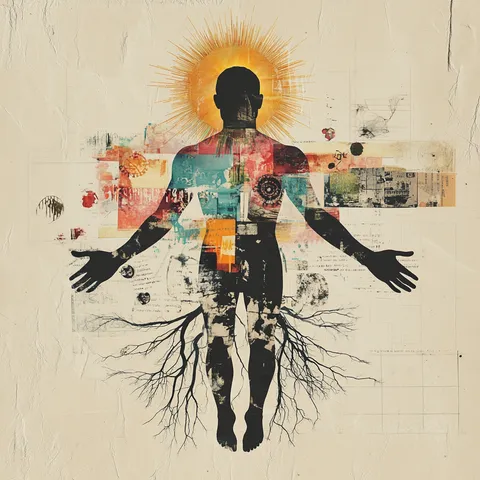
Body map
Body mapping is a participatory visual research method in which participants create a life-size representation of their own body to explore their experiences, emotions, identities, and stories through drawing, color, and symbol.
Circle of gratitude
The Circle of gratitude promotes gratitude and mutual recognition among participants, strengthening group bonds and fostering a positive environment.

Citizens Assembly
Randomly selected citizens who deliberate on a complex policy question over weeks or months, producing evidence-based recommendations free from organized interests.

Civic Dialogues
Structured conversations between citizens and institutions on specific policy issues, with explicit mechanisms for public input to influence concrete decisions.
Community Garden
Community garden is a participatory activity in which neighbors, students, or community groups come together to create and care for a garden in a shared space. Through collaborative work, they grow food, exchange knowledge, and strengthen their connection with the environment and the community.
Community Planting Day
Community Planting Day is a participatory dynamic where a group comes together to plant vegetation in a shared space, promoting environmental awareness, social connection, and collective responsibility.
Comparative Photography
Comparative Photography is a visual and participatory tool for documenting and analyzing changes before and after an intervention, fostering collective reflection on the impact achieved.
Confidence Vote
Confidence Vote is a fast participatory dynamic that lets groups gauge consensus, commitment levels, or uncertainty on a proposal by voting with hand signals or visual cues.

Connecting People
Connecting People is a collaborative activity where participants interact based on observable descriptions, encouraging interaction, mutual understanding, and group fun.
Action Research Practices
Introduced by Kurt Lewin in the 1940s, these practices integrate scientific research with social action to solve concrete problems. Action research fosters collaboration between researchers and participants, making the process as important as the results. Action research practices integrate learning with action:- They merge research with action to solve real problems collaboratively.
- They turn participants into co-researchers, fostering shared responsibility.
- They emphasize the importance of achieving practical results that generate direct impact.
- They allow continuous adjustments through cycles of reflection and action, adapting to emerging needs.
Participatory Action Research
Art Trail
Art Trail is a collaborative activity in which participants intervene in a public or community space through collective artistic actions, aiming to reframe and transform it into a unique, meaningful, and shared place for the community.

Brainstorming
Brainstorming fosters collective creativity and collaboration by generating multiple proposals to address a specific challenge.

Collaborative Benchmarking
Collaborative Benchmarking promotes continuous improvement through comparative analysis and the adaptation of successful practices to one's own context.
Collective Questionnaire
The Collective Questionnaire is a participatory dynamic that enables the collaborative design of key questions, ensuring their relevance and usefulness for the project's or research’s purpose.

Communities of Practice
Communities of Practice brings together people with shared interests or challenges to exchange experiences, build collective knowledge, and generate solutions collaboratively.
Community Garden
Community garden is a participatory activity in which neighbors, students, or community groups come together to create and care for a garden in a shared space. Through collaborative work, they grow food, exchange knowledge, and strengthen their connection with the environment and the community.
Data-driven decisions
Data-driven decisions is a collaborative activity designed to help teams classify key questions, explore research methods, and balance qualitative and quantitative insights to drive better decision-making.

Diagnostic Walk
The Diagnostic Walk is a participatory activity that uses direct observation of the environment to build a collective diagnosis and propose solutions grounded in local context.

Empathy Map
The Empathy Map helps to better understand people's emotions, thoughts, and behaviors to design more human-centered and effective solutions.
Epic Failure
Epic Failure is a participatory activity that invites people to reframe and share failures as valuable learning experiences, turning setbacks into collective strength and resilience.
Film Society
Film Society is a participatory activity that combines a collective film screening with a facilitated critical discussion to foster empathy, reflection, and shared meaning-making.

Flowchart
Flowchart is a collaborative technique that allows participants to analyze cause-effect relationships within a central topic, identify “critical knots,” and assign responsibilities for strategic planning.
Social Justice and Feminist Movements
Currents such as intersectional feminism have profoundly influenced participatory methodologies by highlighting the need to address gender, race, class, and other forms of oppression in collaborative processes. Social justice and feminist perspectives promote equity:- They analyze structural inequalities that affect equitable participation.
- They advocate for intersectional inclusion, considering gender, race, class, and other variables.
- They propose methodologies that empower marginalized communities.
- They emphasize the creation of processes that generate meaningful social transformations.
Participatory Budgeting
Benefit Map
The Benefit Map is a visual tool that connects projects with the positive impacts they generate, helping to prioritize actions and maximize results in participatory contexts.

Community Auction
The Community Auction is an activity where projects symbolically compete for resources, fostering collective evaluation and critical analysis of priorities.

Guess the Number
Guess the Number is a participatory activity that introduces the Delphi prediction method in a simple way through repeated estimations and group analysis of objects in a jar.

Ideas marketplace
The Ideas marketplace is a participatory activity that simulates a market where participants collectively decide how to allocate a budget among various ideas or projects.
Impact and feasibility scale
The Impact and feasibility scale is a participatory tool for evaluating proposals based on their potential benefit and ease of implementation, promoting strategic and consensus-driven decisions.

Investment Roulette
Investment Roulette is an activity that assigns proposals to random categories, fostering creativity, strategic analysis, and collective decision-making.

Investor role-playing
Investor role-playing is a strategic and engaging activity that simulates resource allocation to collectively evaluate and prioritize proposals.
Project bank
The Project Bank is a participatory activity for presenting, evaluating, and prioritizing proposals, fostering collaborative resource allocation and the strategic development of ideas.
Thematic Committees
Thematic Committees are working groups that analyze specific proposals in key areas, promoting informed and strategic decisions through active participation and collaboration.
Indigenous Worldviews and Decolonial Approaches
The traditions of many indigenous peoples around the world have contributed valuable perspectives on interconnection, respect for ancestral knowledge, and the importance of community in problem-solving. These influences also challenge participatory models that might perpetuate colonial dynamics. Indigenous worldviews and decolonial approaches enrich the cultural framework:- They recover the value of ancestral knowledge and local cultural practices.
- They promote epistemic equity, challenging colonial dynamics in participatory processes.
- They underscore the importance of community and environmental connection for sustainability.
- They respect the rhythms, priorities, and perspectives of local communities.
Epic Failure
Epic Failure is a participatory activity that invites people to reframe and share failures as valuable learning experiences, turning setbacks into collective strength and resilience.

Insight Exchange
Insight Exchange allows for the collection of rich perspectives as participants exchange ideas and reflect on shared experiences.
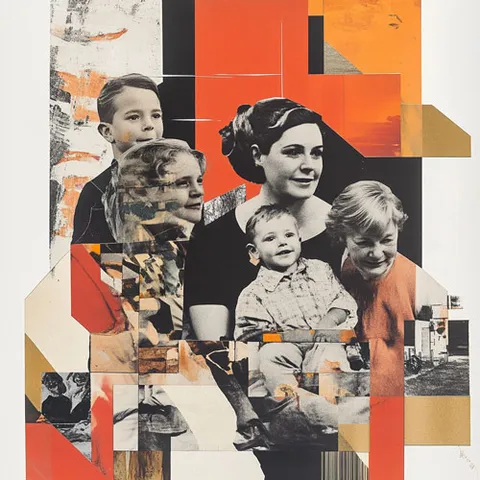
Intergenerational Dialogue
Promote understanding and collaboration across generations with Intergenerational Dialogue, a dynamic activity that fosters empathy, mutual learning, and shared solutions by exploring diverse experiences, values, and perspectives.
Narrative workshop
Engage in a Narrative workshop to share stories, foster empathy, and build collective solutions. Ideal for team building, reflection, and creative problem-solving.

Stories of change
Stories of change are a participatory tool for capturing and analyzing real experiences that showcase significant transformations and deep learning.
Community Garden
Community garden is a participatory activity in which neighbors, students, or community groups come together to create and care for a garden in a shared space. Through collaborative work, they grow food, exchange knowledge, and strengthen their connection with the environment and the community.
Community Planting Day
Community Planting Day is a participatory dynamic where a group comes together to plant vegetation in a shared space, promoting environmental awareness, social connection, and collective responsibility.
Risk mapping
Risk mapping is a visual and participatory tool for identifying and analyzing threats and vulnerabilities in a specific area or context, fostering collective strategies for prevention and response.

The Iceberg Model
The Iceberg Model is a mindful methodology that analyzes both visible and hidden aspects of products and services to foster sustainable and strategic design.
The Nine Questions Technique
The Nine Questions Technique is a participatory methodology that provides a comprehensive structure for designing, planning, or evaluating projects. It promotes collective reflection and collaborative work by addressing all essential aspects of a project in an integrated way.
Comparative Photography
Comparative Photography is a visual and participatory tool for documenting and analyzing changes before and after an intervention, fostering collective reflection on the impact achieved.

Local Connections Map
The Local Connections Map is a participatory tool for identifying and analyzing existing networks within an environment, promoting collaboration and strengthening key relationships.