Participatory Evaluation
Anticipating Challenges
Anticipating Challenges is a participatory activity in which teams imagine that their project has failed and analyze the possible reasons behind this scenario.

Back-to-Back Drawing
Back-to-Back Drawing is a participatory activity in which participants work in pairs to describe and reproduce an image without seeing it, fostering communication and active listening skills.

Backward Planning
La Planificación retroactiva ayuda a identificar los pasos necesarios para lograr un objetivo trabajando desde el resultado final hacia el presente, promoviendo la estrategia y la claridad grupal.

Ball of thread
Ball of thread is a collaborative activity where participants build a symbolic thread network to reflect their connections, fostering group cohesion and teamwork.

Beneficiary Stories
The Beneficiary Stories dynamic collects and reflects on personal narratives to document the impact of projects and generate learning from the perspective of those who lived through them.

Bottleneck Analysis
The Bottleneck Analysis is a participatory tool for identifying and addressing recurring obstacles in a project, optimizing processes, and promoting effective collaboration.

Brainstorming
Brainstorming fosters collective creativity and collaboration by generating multiple proposals to address a specific challenge.
Cascade Greeting
Cascade Greeting is a closing activity where participants greet each other progressively, wishing one another well for the future and creating an atmosphere of gratitude and interpersonal connection.

Chronological Review
The Chronological Review is a participatory activity that analyzes progress by comparing it to the planned timeline, promoting adjustments and reflections to ensure the project's success.
Circle of gratitude
The Circle of gratitude promotes gratitude and mutual recognition among participants, strengthening group bonds and fostering a positive environment.

Collaborative Benchmarking
Collaborative Benchmarking promotes continuous improvement through comparative analysis and the adaptation of successful practices to one's own context.

Collaborative Competition
Collaborative Competition is an activity that combines teamwork with problem-solving in a friendly, competitive format to foster creativity and learning.
Collaborative mind map
The Collaborative mind map is a visual tool that allows groups to explore, organize, and connect ideas on a topic in a creative and participatory way.

Collective Journal
The Collective Journal is a participatory activity that allows groups to record daily progress, reflections, and learnings, fostering continuous improvement and collaborative documentation.
Collective Questionnaire
The Collective Questionnaire is a participatory dynamic that enables the collaborative design of key questions, ensuring their relevance and usefulness for the project's or research’s purpose.
Comparative Photography
Comparative Photography is a visual and participatory tool for documenting and analyzing changes before and after an intervention, fostering collective reflection on the impact achieved.

Confidence Vote
Confidence Vote is a fast participatory dynamic that lets groups gauge consensus, commitment levels, or uncertainty on a proposal by voting with hand signals or visual cues.

Critical Incident
The Critical Incident activity is based on experiential learning techniques and reflective analysis to turn challenges into opportunities for growth.

Daily achievements board
The Daily achievements board is a visual and participatory tool for recording and celebrating daily progress, fostering motivation and reflective team analysis.

Data-driven decisions
Data-driven decisions is a collaborative activity designed to help teams classify key questions, explore research methods, and balance qualitative and quantitative insights to drive better decision-making.

Diagnostic Walk
The Diagnostic Walk is a participatory activity that uses direct observation of the environment to build a collective diagnosis and propose solutions grounded in local context.

Emotional map
The Emotional map allows for the identification and visual analysis of emotions, helping to understand their impact on projects, spaces, or experiences.

Epic Failure
Epic Failure is a participatory activity that invites people to reframe and share failures as valuable learning experiences, turning setbacks into collective strength and resilience.

Evaluation wheel
The Evaluation wheel is a visual and participatory tool that allows for the evaluation and reflection on different aspects of a project or activity, facilitating collective analysis and improvement planning.

Feature prioritization
Feature prioritization is a participatory exercise designed to identify and organize the key elements of a project or design, ensuring a focus on the most relevant and viable aspects.
Forum Theater
Engage in Forum Theater, a participatory method to explore social issues through performance. Empower communities, foster creative solutions, and promote collective action.
Four Corners
Four Corners encourages dialogue and the exploration of perspectives by allowing participants to choose and analyze different positions within a group setting.

Four Ls Retrospective
Closing technique prompting reflection on what participants Liked, Learned, Lacked, and Longed for — generating collective learning and improvements for future program editions.

Gallery of results
The Gallery of results is a visual and participatory exhibition that allows achievements and lessons to be shared in a creative and reflective way.

GROW Coaching
GROW Coaching is a collaborative activity that uses the GROW model to foster coaching skills and personal reflection, creating meaningful connections among participants.

Guess the Number
Guess the Number is a participatory activity that introduces the Delphi prediction method in a simple way through repeated estimations and group analysis of objects in a jar.

Heat Map Voting
Heat Map Voting is a visual and collaborative technique for prioritizing key aspects within a set of ideas by distributing multiple votes across specific elements.

I Like, I Wish, I Wonder
I Like, I Wish, I Wonder is a participatory activity where people reflect on a shared experience by expressing what they appreciated, what they would improve, and what questions they are left with, creating a space for honest feedback, learning, and connection.

Impact and feasibility scale
The Impact and feasibility scale is a participatory tool for evaluating proposals based on their potential benefit and ease of implementation, promoting strategic and consensus-driven decisions.

Impromptu Speech
Impromptu Speech develops communication skills, quick thinking, and creativity through brief and spontaneous presentations on various topics.

Interaction map
The Interaction map is a visual activity that enables participants to identify and analyze key relationships within a system to make informed decisions.

Learning Contract
A co-designed agreement between learner and facilitator that defines goals, strategies, resources, and evidence of achievement. Builds metacognitive awareness, intrinsic motivation, and accountability.
Learning puzzle
The Learning puzzle is an activity where participants learn and teach parts of a topic to collectively build a comprehensive understanding.

Mad-Sad-Glad Retrospective
The Mad-Sad-Glad retrospective invites teams to surface what made them angry, sad, or glad, turning emotional reflection into concrete improvements for team culture and collaboration.
Narrative workshop
Engage in a Narrative workshop to share stories, foster empathy, and build collective solutions. Ideal for team building, reflection, and creative problem-solving.

One Sentence a Day
One Sentence a Day is a participatory activity in which each person contributes one short sentence every day to collectively build a record of shared thoughts, emotions, or reflections over a set period of time.
Participatory photography
Empower participants through participatory photography, a creative activity to capture and analyze realities, foster critical reflection, and inspire collective action using visual storytelling.

Participatory SWOT Analysis
Participatory SWOT Analysis is a collaborative tool used to identify and connect strengths, opportunities, weaknesses, and threats to design collective strategies.
Perception Scale
Engage participants with Perception Scales, a dynamic tool to capture and analyze diverse views, fostering reflection and group insights for actionable outcomes.

Pre-mortem
A risk analysis technique where the group imagines the project has already failed and works backwards. Surfaces blind spots, hidden risks, and unspoken concerns while there's still time to act.

Problem Chain
The Problem Chain is a visual and collaborative tool to identify, analyze, and connect the causes and effects of a problem, building strategic solutions.
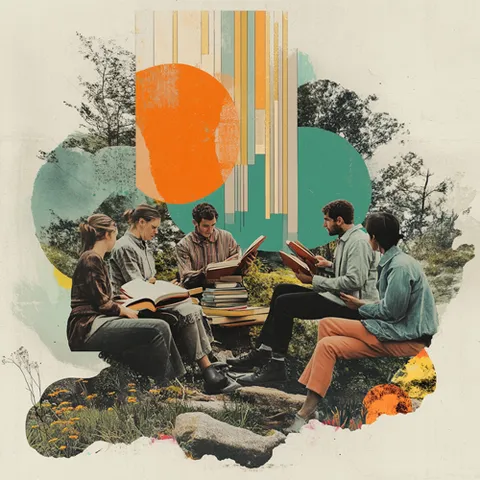
Reading Club
Reading Club is a participatory activity where a group of people gathers to share impressions, ideas, and reflections based on a common text, fostering conversation, active listening, and collective learning.

Reflection with Images
Reflection with Images is a creative activity that uses visual elements to express emotions, ideas, and learnings.
Risk mapping
Risk mapping is a visual and participatory tool for identifying and analyzing threats and vulnerabilities in a specific area or context, fostering collective strategies for prevention and response.

Sandwich
The Sandwich dynamic is inspired by visual and collaborative techniques used to structure information in a creative and understandable way.

Shelling Corn
Shelling Corn is a collaborative activity where participants shell corn to reflect on community, teamwork, and the value of individual contributions.
Sociocracy: Consent-Based Decision Making
Governance system using consent — not consensus — to make decisions, organizing work in circles with clear roles and distributing power equitably across the organization.

Solution tree
Solution tree is a collaborative activity to analyze problems, identify root causes, and develop actionable solutions. Ideal for fostering teamwork, critical thinking, and creative problem-solving.

Stories of change
Stories of change are a participatory tool for capturing and analyzing real experiences that showcase significant transformations and deep learning.

The Iceberg Model
The Iceberg Model is a mindful methodology that analyzes both visible and hidden aspects of products and services to foster sustainable and strategic design.
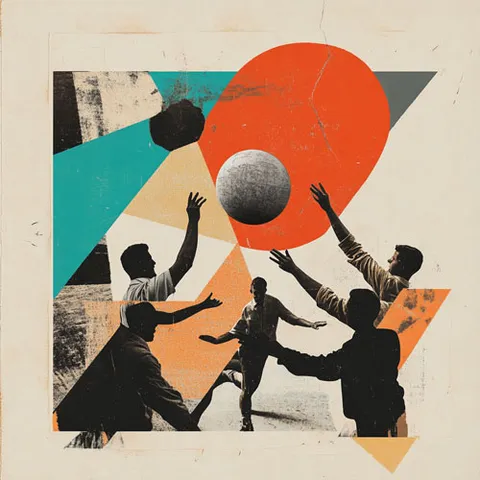
The Question Ball
The Question Ball is a playful and reflective activity where participants answer questions read by the facilitator upon receiving a ball, fostering group interaction in a fun and meaningful way.

Thematic Committees
Thematic Committees are working groups that analyze specific proposals in key areas, promoting informed and strategic decisions through active participation and collaboration.

Theory of Change
A participatory framework that maps how a group's activities generate real change. Connects actions, outputs, outcomes, and impact — and makes visible the assumptions that must hold at every link.

Think – Pair – Share: Individual Reflection, Pair Dialogue, Group Sharing
A 3-step dynamic that activates everyone's participation: think alone, talk in pairs, share with the group. Guarantees equitable engagement in education, training, and facilitation at any scale.

Timeline
Create a collaborative timeline activity to visually analyze key events, foster reflection, and generate insights. Ideal for planning, evaluation, and team building.

Traffic Light Activity
The Traffic Light Activity is a visual and collaborative tool for identifying strengths, areas for improvement, and critical issues, promoting informed and strategic decision-making.

Treasure Hunt
The Treasure Hunt combines teamwork and challenge-solving to promote active learning and collaboration in an engaging, game-based format.
True or False
The True or False activity challenges concepts and promotes critical learning through the evaluation and discussion of relevant statements.

Wishes
Wishes is an icebreaker activity where participants share three wishes related to their expectations for the event, fostering group connection and helping the facilitator align the activity’s purpose with participants’ goals.
Yes, but...
Yes, but... is a brainstorming activity where participants explore creative reasons to avoid taking a specific action, using avoidance as a tool to analyze barriers and encourage critical thinking.