Participatory Methodologies in Social Work
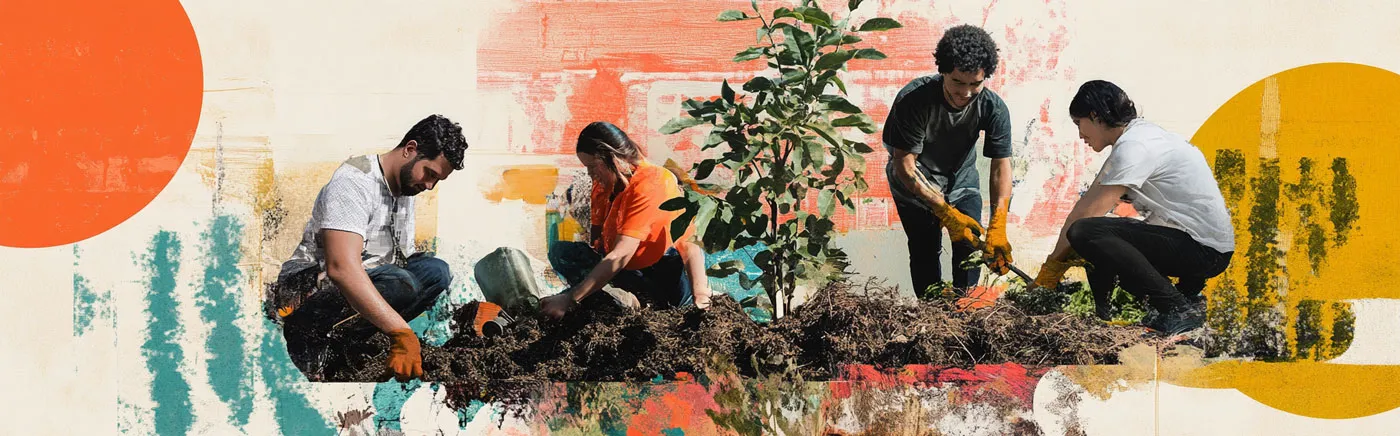
Participatory methodologies in the field of social work constitute a transformative paradigm that reconfigures relationships between professionals and communities. This approach transcends traditional paternalistic models to build horizontal dynamics where people and collectives participate in all phases of the process as active subjects rather than passive beneficiaries of social intervention. In contexts marked by the complexity of social problems and the need for sustainable responses, these methodologies enable deeper transformations and more relevant solutions, legitimized and rooted in local realities.
Collective social action
Collective social action represents an epistemological break with individualistic intervention models, establishing processes where social transformation emerges from community organization and mobilization. This approach recognizes that many social problems have structural roots that require collective rather than merely individual responses.
Methods such as community campaigns or self-management initiatives transform those traditionally considered "users" or "beneficiaries" into active agents of social change. This repositioning not only enriches the process with greater reach and impact, but also develops permanent organizational capacities, empowers participants, and generates transformations that transcend the immediate to influence structural conditions that perpetuate situations of inequity and social exclusion.

Art Trail
Art Trail is a collaborative activity in which participants intervene in a public or community space through collective artistic actions, aiming to reframe and transform it into a unique, meaningful, and shared place for the community.
Benefit Map
The Benefit Map is a visual tool that connects projects with the positive impacts they generate, helping to prioritize actions and maximize results in participatory contexts.
Circle of gratitude
The Circle of gratitude promotes gratitude and mutual recognition among participants, strengthening group bonds and fostering a positive environment.

Collective DIY Mascot
Collective DIY Mascot is a participatory activity in which a group builds a symbolic mascot together, adding one element at a time across weeks. The result is a creative, emotional representation of their collective identity.

Community Garden
Community garden is a participatory activity in which neighbors, students, or community groups come together to create and care for a garden in a shared space. Through collaborative work, they grow food, exchange knowledge, and strengthen their connection with the environment and the community.

Community Planting Day
Community Planting Day is a participatory dynamic where a group comes together to plant vegetation in a shared space, promoting environmental awareness, social connection, and collective responsibility.

Epic Failure
Epic Failure is a participatory activity that invites people to reframe and share failures as valuable learning experiences, turning setbacks into collective strength and resilience.

Film Society
Film Society is a participatory activity that combines a collective film screening with a facilitated critical discussion to foster empathy, reflection, and shared meaning-making.

First Impressions
First Impressions is a participatory activity that explores initial perceptions through the exchange of descriptive words related to communication and leadership styles.
Four Corners
Four Corners encourages dialogue and the exploration of perspectives by allowing participants to choose and analyze different positions within a group setting.

How Might We (HMW)
How Might We is a Design Sprint methodology that transforms pain points into positive, collaborative questions, guiding the team toward creative solutions.

Ideas marketplace
The Ideas marketplace is a participatory activity that simulates a market where participants collectively decide how to allocate a budget among various ideas or projects.
Community intervention
Community intervention overcomes fragmented approaches centered on isolated individuals or families to build processes that address problems from their relational and territorial dimension. This approach starts from the recognition of community as a complex system of interactions and the premise that many sustainable solutions emerge from the revitalization of the social fabric and local support networks.
Methodologies such as asset-based community development or neighborhood support networks facilitate interventions that strengthen collective capacities while addressing concrete needs. The true challenge lies in balancing attention to urgent problems with broader community development processes, creating interventions where improvements in material conditions interweave with the strengthening of social cohesion, collective identity, and local organizational capacity.
Community Planting Day
Community Planting Day is a participatory dynamic where a group comes together to plant vegetation in a shared space, promoting environmental awareness, social connection, and collective responsibility.

Forum Theater
Engage in Forum Theater, a participatory method to explore social issues through performance. Empower communities, foster creative solutions, and promote collective action.

Risk mapping
Risk mapping is a visual and participatory tool for identifying and analyzing threats and vulnerabilities in a specific area or context, fostering collective strategies for prevention and response.

The Coin
The Coin facilitates the exchange of positive and challenging experiences, promoting reflection and group learning in a dynamic way.
Community diagnosis
Participatory community diagnosis constitutes a process of collective construction of knowledge about local reality that transcends mere data collection. This methodology integrates objective and subjective, quantitative and qualitative dimensions, to develop complex understandings of problems, potentialities, and social dynamics from multiple perspectives.
Techniques such as collective needs mapping or participatory rural assessments enable situated and multidimensional knowledge of the territory to emerge. The strength of this approach lies in its capacity to make ignored problems visible, reinterpret data from everyday experiences, and establish priorities that genuinely respond to local concerns rather than predetermined external agendas.
Participatory Mapping
Community members collectively map their territory, resources, and needs. Essential for community diagnosis, local public policy, and territorial rights advocacy.
Risk mapping
Risk mapping is a visual and participatory tool for identifying and analyzing threats and vulnerabilities in a specific area or context, fostering collective strategies for prevention and response.
Benefit Map
The Benefit Map is a visual tool that connects projects with the positive impacts they generate, helping to prioritize actions and maximize results in participatory contexts.
Collaborative mind map
The Collaborative mind map is a visual tool that allows groups to explore, organize, and connect ideas on a topic in a creative and participatory way.

Future scenarios
The Future Scenarios activity allows participants to imagine different development possibilities to anticipate risks, seize opportunities, and generate innovative ideas.

I Like, I Wish, I Wonder
I Like, I Wish, I Wonder is a participatory activity where people reflect on a shared experience by expressing what they appreciated, what they would improve, and what questions they are left with, creating a space for honest feedback, learning, and connection.
Inquiry Workshop
Discover how the Inquiry Workshop fosters critical thinking and collective exploration by generating key questions that guide research, project design, and problem analysis.

Interaction map
The Interaction map is a visual activity that enables participants to identify and analyze key relationships within a system to make informed decisions.

Participatory SWOT Analysis
Participatory SWOT Analysis is a collaborative tool used to identify and connect strengths, opportunities, weaknesses, and threats to design collective strategies.
Collective Questionnaire
The Collective Questionnaire is a participatory dynamic that enables the collaborative design of key questions, ensuring their relevance and usefulness for the project's or research’s purpose.

Decision maze
The Decision maze guides participants through paths and challenges that simulate real decision-making processes, promoting critical and collaborative learning.
First Impressions
First Impressions is a participatory activity that explores initial perceptions through the exchange of descriptive words related to communication and leadership styles.
Participatory analysis
Participatory analysis transforms one of the most critical moments in research and intervention processes: the interpretation of collected information. This methodology establishes deliberative spaces where data and evidence are collectively examined, integrating diverse theoretical frameworks with interpretations that emerge from participants' lived experience.
Tools such as community interpretation circles or collective analysis matrices facilitate processes where meanings are constructed dialogically. The true value of this approach lies in its capacity to produce deeper and more contextualized understandings, avoid interpretive biases, and generate conclusions that integrate both analytical rigor and cultural and social relevance.

Data-driven decisions
Data-driven decisions is a collaborative activity designed to help teams classify key questions, explore research methods, and balance qualitative and quantitative insights to drive better decision-making.
Role Simulation
Role Simulation is a participatory activity in which participants work in teams to create and act out different scenarios, exploring possible outcomes, dialogues, and decisions.
Thematic Committees
Thematic Committees are working groups that analyze specific proposals in key areas, promoting informed and strategic decisions through active participation and collaboration.

Urban Sketching
Urban Sketching is a participatory activity where individuals draw real-life urban or community spaces through direct observation. It encourages artistic expression, fosters a deeper connection with the environment, and transforms everyday places into sources of inspiration and shared reflection.
Comparative Photography
Comparative Photography is a visual and participatory tool for documenting and analyzing changes before and after an intervention, fostering collective reflection on the impact achieved.
Interaction map
The Interaction map is a visual activity that enables participants to identify and analyze key relationships within a system to make informed decisions.

Wheel of common interests
The Common Interests Wheel connects participants through hobbies and affinities, promoting interaction and establishing foundations for future group collaborations.
Citizen participation
Citizen participation in social work represents a mode of intervention that dissolves traditional boundaries between expert professionals and citizenship to create spaces where people exercise their right to influence public decisions that affect their lives. This approach breaks with the conception of the citizen as a mere recipient of public services to conceive them as a leading actor in processes of design, implementation, and evaluation of social policies and programs.
Methodologies such as participatory budgeting or territorial concertation tables configure processes where citizens exercise effective power over resources and public decisions. The transformative power of this approach lies in its capacity to democratize public management, generate solutions better adapted to local realities, and rebuild trust between institutions and citizens, simultaneously strengthening the exercise of rights and the effectiveness of social policies.
Collective Questionnaire
The Collective Questionnaire is a participatory dynamic that enables the collaborative design of key questions, ensuring their relevance and usefulness for the project's or research’s purpose.
Comparative Photography
Comparative Photography is a visual and participatory tool for documenting and analyzing changes before and after an intervention, fostering collective reflection on the impact achieved.

Feature prioritization
Feature prioritization is a participatory exercise designed to identify and organize the key elements of a project or design, ensuring a focus on the most relevant and viable aspects.
Film Society
Film Society is a participatory activity that combines a collective film screening with a facilitated critical discussion to foster empathy, reflection, and shared meaning-making.
Forum Theater
Engage in Forum Theater, a participatory method to explore social issues through performance. Empower communities, foster creative solutions, and promote collective action.
Four Corners
Four Corners encourages dialogue and the exploration of perspectives by allowing participants to choose and analyze different positions within a group setting.
Gallery of results
The Gallery of results is a visual and participatory exhibition that allows achievements and lessons to be shared in a creative and reflective way.
Ideas marketplace
The Ideas marketplace is a participatory activity that simulates a market where participants collectively decide how to allocate a budget among various ideas or projects.

Impact and feasibility scale
The Impact and feasibility scale is a participatory tool for evaluating proposals based on their potential benefit and ease of implementation, promoting strategic and consensus-driven decisions.
Inquiry Workshop
Discover how the Inquiry Workshop fosters critical thinking and collective exploration by generating key questions that guide research, project design, and problem analysis.

Make a Wish
Make a Wish is a participatory dynamic in which a community identifies meaningful wishes or needs that can be addressed collectively, votes on one of them, and organizes collaborative actions to make it come true, gathering support from individuals, organizations, and local businesses.
Narrative workshop
Engage in a Narrative workshop to share stories, foster empathy, and build collective solutions. Ideal for team building, reflection, and creative problem-solving.
Participatory mapping
Participatory mapping allows communities to represent and reinterpret the territories they inhabit, making visible social, historical, cultural, and political dimensions that tend to remain hidden in conventional maps. This methodology recognizes that territories are not simple physical spaces but social constructions loaded with meanings, power relations, and potentialities for transformation.
Techniques such as social cartography or participatory geographic information systems facilitate processes where spatialized representations of problems, resources, and community dynamics emerge. The true power of this approach lies in its capacity to reconnect communities with their territories, make spatial dynamics of inequality and exclusion visible, and generate territorialized understandings that underpin more contextualized and relevant social interventions.

Affinity diagram
The Affinity Diagram is a visual and participatory tool that organizes ideas into categories to facilitate group analysis and informed decision-making.
Benefit Map
The Benefit Map is a visual tool that connects projects with the positive impacts they generate, helping to prioritize actions and maximize results in participatory contexts.

Collaborative data portrait
Collaborative Data Portrait is a visual activity where participants create a group portrait using graphically represented data, fostering self-expression and team connection.

Concept Route
The Concept Route organizes and connects key ideas through a collaborative visual journey, facilitating learning and the communication of complex topics.

Emotional map
The Emotional map allows for the identification and visual analysis of emotions, helping to understand their impact on projects, spaces, or experiences.

Empathy Map
The Empathy Map helps to better understand people's emotions, thoughts, and behaviors to design more human-centered and effective solutions.

Heat Map Voting
Heat Map Voting is a visual and collaborative technique for prioritizing key aspects within a set of ideas by distributing multiple votes across specific elements.

Impact vs. Effort Matrix
The Impact vs. Effort Matrix helps prioritize actions and decisions by evaluating them based on their impact and required effort, promoting efficiency and effectiveness.

Local Connections Map
The Local Connections Map is a participatory tool for identifying and analyzing existing networks within an environment, promoting collaboration and strengthening key relationships.
Now, Next, Later
Now, Next, Later organizes tasks based on their temporal priority to promote clarity, focus, and efficiency in planning.

Reflection with Images
Reflection with Images is a creative activity that uses visual elements to express emotions, ideas, and learnings.

Solution tree
Solution tree is a collaborative activity to analyze problems, identify root causes, and develop actionable solutions. Ideal for fostering teamwork, critical thinking, and creative problem-solving.
Collective construction
Collective construction in social work transcends approaches where solutions are designed exclusively by experts to create co-creation processes where technical knowledge combines with local creativity and experience. This methodology establishes that the best responses to complex social problems emerge from collective intelligence and the diversity of perspectives present in a community.
Methodologies such as social innovation laboratories or participatory design workshops facilitate the generation of solutions rooted in local realities. The power of this approach lies in its capacity to generate innovative responses through cross-pollination of ideas, develop solutions that leverage existing local resources and capacities, and strengthen community commitment and ownership of implemented initiatives, significantly increasing their probabilities of success and sustainability.
Art Trail
Art Trail is a collaborative activity in which participants intervene in a public or community space through collective artistic actions, aiming to reframe and transform it into a unique, meaningful, and shared place for the community.

Broken Telephone
Broken Telephone is a collaborative game that demonstrates how messages change when passed along, fostering communication skills, active listening, and creativity.
Collaborative data portrait
Collaborative Data Portrait is a visual activity where participants create a group portrait using graphically represented data, fostering self-expression and team connection.
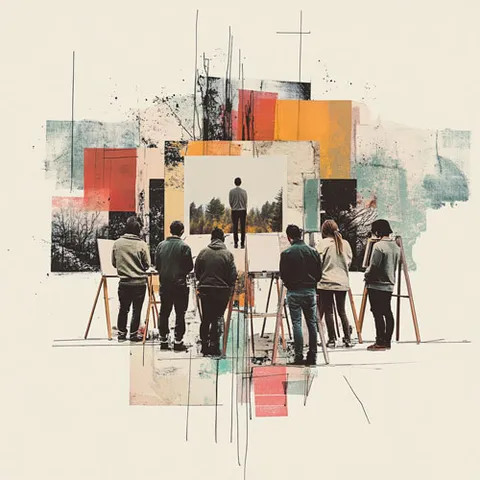
Collaborative Life Drawing
Collaborative Live Drawing is an artistic and group-based activity where participants take turns drawing on each other's sheets, based on observation sessions with live models or objects. The constant rotation promotes collaboration, the exploration of multiple styles, and a collective reflection on perception, the body, and shared creation.

Collaborative Oracle Card Creation
Collaborative Oracle Card Creation is a participatory activity where participants co-design a deck of oracle cards with meaningful symbols and messages, fostering creativity and collective reflection.

Collaborative sketching
Collaborative sketching is a visual activity that encourages the expression of ideas and the joint development of solutions through quick and simple drawings.
Collective DIY Mascot
Collective DIY Mascot is a participatory activity in which a group builds a symbolic mascot together, adding one element at a time across weeks. The result is a creative, emotional representation of their collective identity.

Collective Rube Goldberg Machine
Collective Rube Goldberg Machine is a participatory activity where teams collaboratively build a whimsical chain reaction device to perform a simple task, using creativity, problem-solving, and everyday materials to spark teamwork and fun experimentation.
Community Garden
Community garden is a participatory activity in which neighbors, students, or community groups come together to create and care for a garden in a shared space. Through collaborative work, they grow food, exchange knowledge, and strengthen their connection with the environment and the community.
Community Planting Day
Community Planting Day is a participatory dynamic where a group comes together to plant vegetation in a shared space, promoting environmental awareness, social connection, and collective responsibility.

Creation of instructional resources
The Creation of instructional resources is a participatory activity that allows participants to design educational tools while consolidating their learning and developing creative skills.

Creative Mark Exploration
Creative Mark Exploration is a participatory activity that encourages experimentation with strokes and textures to discover personal styles.
Collaborative reflection
Participatory collaborative reflection transcends technocratic evaluation focused exclusively on quantitative indicators to build collective learning processes from experience. This methodology integrates technical criteria with community assessments, recognizing the importance of subjective and intersubjective dimensions in understanding social change processes.
Methodologies such as experience systematization or learning circles facilitate processes where participants critically analyze their practices to extract learnings. The richness of this approach lies in its capacity to generate practical knowledge from action, identify facilitating and obstructing factors not initially evident, and build collective memory that nourishes both local processes and the broader field of social work through theorization from practice.

Activity clock
The Activity clock invites participants to organize and balance their daily time through an effective visual representation.

Ball of thread
Ball of thread is a collaborative activity where participants build a symbolic thread network to reflect their connections, fostering group cohesion and teamwork.

Collaborative Benchmarking
Collaborative Benchmarking promotes continuous improvement through comparative analysis and the adaptation of successful practices to one's own context.
Collaborative data portrait
Collaborative Data Portrait is a visual activity where participants create a group portrait using graphically represented data, fostering self-expression and team connection.
Collaborative Life Drawing
Collaborative Live Drawing is an artistic and group-based activity where participants take turns drawing on each other's sheets, based on observation sessions with live models or objects. The constant rotation promotes collaboration, the exploration of multiple styles, and a collective reflection on perception, the body, and shared creation.

Collective Journal
The Collective Journal is a participatory activity that allows groups to record daily progress, reflections, and learnings, fostering continuous improvement and collaborative documentation.

Confidence Vote
Confidence Vote is a fast participatory dynamic that lets groups gauge consensus, commitment levels, or uncertainty on a proposal by voting with hand signals or visual cues.
Decision maze
The Decision maze guides participants through paths and challenges that simulate real decision-making processes, promoting critical and collaborative learning.
Epic Failure
Epic Failure is a participatory activity that invites people to reframe and share failures as valuable learning experiences, turning setbacks into collective strength and resilience.
Film Society
Film Society is a participatory activity that combines a collective film screening with a facilitated critical discussion to foster empathy, reflection, and shared meaning-making.
Four Corners
Four Corners encourages dialogue and the exploration of perspectives by allowing participants to choose and analyze different positions within a group setting.

GROW Coaching
GROW Coaching is a collaborative activity that uses the GROW model to foster coaching skills and personal reflection, creating meaningful connections among participants.
Participatory research
Participatory research in social work radically transforms processes of knowledge generation about social reality, establishing a dialogue of knowledges where academic-professional knowledge interweaves with the experiential knowledge of communities. This approach overcomes traditional extractive research to create processes where communities participate as co-researchers in all phases of the investigative process.
Methodologies such as participatory action research or collaborative ethnography facilitate the production of socially relevant and methodologically rigorous knowledge. The power of this approach lies in its capacity to democratize knowledge production, generate more contextualized and relevant understandings of social realities, and organically link research with transformation processes, overcoming the false dichotomy between knowing and transforming reality.
Participatory Action Research
Art Trail
Art Trail is a collaborative activity in which participants intervene in a public or community space through collective artistic actions, aiming to reframe and transform it into a unique, meaningful, and shared place for the community.

Brainstorming
Brainstorming fosters collective creativity and collaboration by generating multiple proposals to address a specific challenge.
Collaborative Benchmarking
Collaborative Benchmarking promotes continuous improvement through comparative analysis and the adaptation of successful practices to one's own context.
Collective Questionnaire
The Collective Questionnaire is a participatory dynamic that enables the collaborative design of key questions, ensuring their relevance and usefulness for the project's or research’s purpose.

Communities of Practice
Communities of Practice brings together people with shared interests or challenges to exchange experiences, build collective knowledge, and generate solutions collaboratively.
Community Garden
Community garden is a participatory activity in which neighbors, students, or community groups come together to create and care for a garden in a shared space. Through collaborative work, they grow food, exchange knowledge, and strengthen their connection with the environment and the community.
Data-driven decisions
Data-driven decisions is a collaborative activity designed to help teams classify key questions, explore research methods, and balance qualitative and quantitative insights to drive better decision-making.

Diagnostic Walk
The Diagnostic Walk is a participatory activity that uses direct observation of the environment to build a collective diagnosis and propose solutions grounded in local context.
Empathy Map
The Empathy Map helps to better understand people's emotions, thoughts, and behaviors to design more human-centered and effective solutions.
Epic Failure
Epic Failure is a participatory activity that invites people to reframe and share failures as valuable learning experiences, turning setbacks into collective strength and resilience.
Film Society
Film Society is a participatory activity that combines a collective film screening with a facilitated critical discussion to foster empathy, reflection, and shared meaning-making.

Flowchart
Flowchart is a collaborative technique that allows participants to analyze cause-effect relationships within a central topic, identify “critical knots,” and assign responsibilities for strategic planning.
Participatory evaluation
Participatory evaluation constitutes a fundamental reconfiguration of one of the most critical moments in social intervention processes: the assessment of results and impacts. This approach transcends external evaluations conducted exclusively by experts to create processes where all involved actors participate in determining what to evaluate, how to do it, and how to interpret the findings.
Techniques such as community evaluation wheels or collectively constructed indicators facilitate multidimensional assessments that integrate technical and local criteria. The true value of this approach lies in its capacity to capture initially unforeseen impacts, understand contextual factors that influence results, and use evaluation not only as a final measurement but as a tool for continuous learning and improvement that strengthens permanent evaluative capacities in communities.
Participatory Evaluation
Anticipating Challenges
Anticipating Challenges is a participatory activity in which teams imagine that their project has failed and analyze the possible reasons behind this scenario.

Back-to-Back Drawing
Back-to-Back Drawing is a participatory activity in which participants work in pairs to describe and reproduce an image without seeing it, fostering communication and active listening skills.

Backward Planning
La Planificación retroactiva ayuda a identificar los pasos necesarios para lograr un objetivo trabajando desde el resultado final hacia el presente, promoviendo la estrategia y la claridad grupal.
Ball of thread
Ball of thread is a collaborative activity where participants build a symbolic thread network to reflect their connections, fostering group cohesion and teamwork.
Beneficiary Stories
The Beneficiary Stories dynamic collects and reflects on personal narratives to document the impact of projects and generate learning from the perspective of those who lived through them.

Bottleneck Analysis
The Bottleneck Analysis is a participatory tool for identifying and addressing recurring obstacles in a project, optimizing processes, and promoting effective collaboration.
Brainstorming
Brainstorming fosters collective creativity and collaboration by generating multiple proposals to address a specific challenge.
Cascade Greeting
Cascade Greeting is a closing activity where participants greet each other progressively, wishing one another well for the future and creating an atmosphere of gratitude and interpersonal connection.

Chronological Review
The Chronological Review is a participatory activity that analyzes progress by comparing it to the planned timeline, promoting adjustments and reflections to ensure the project's success.
Circle of gratitude
The Circle of gratitude promotes gratitude and mutual recognition among participants, strengthening group bonds and fostering a positive environment.
Collaborative Benchmarking
Collaborative Benchmarking promotes continuous improvement through comparative analysis and the adaptation of successful practices to one's own context.

Collaborative Competition
Collaborative Competition is an activity that combines teamwork with problem-solving in a friendly, competitive format to foster creativity and learning.
Participatory methodologies in social work represent much more than a set of techniques; they constitute an ethical, political, and epistemological approach that reconfigures relationships between professionals and communities. In contexts marked by complex social problems and growing inequality gaps, these approaches offer promising pathways for building more effective, democratic, and sustainable interventions.
Their true value lies not in their methodological sophistication but in their capacity to humanize social intervention, reclaiming the dignity and agency of people and collectives historically relegated to passive roles. These methodologies demonstrate, in everyday practice, that it is possible to develop technically rigorous social work without instrumentalizing communities, and that effective social transformations can be built when the transformative power residing in communities themselves is recognized and enhanced. Ultimately, they represent a commitment to the deep democratization of social work and the construction of more just and participatory societies.